
A Study in Friendship Asymmetry
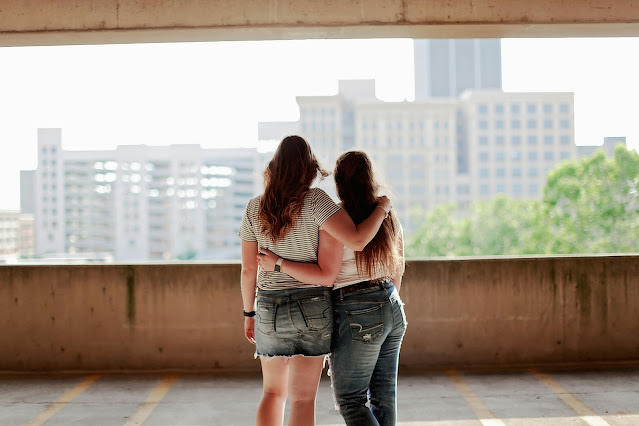
I have never been anyone's best friend.
This isn't self-pity masquerading as insight. It's simply empirical data gathered over four decades of human interaction. I've had best friends, certainly, beginning with the usual elementary school alliances forged over shared snacks and maintained through playground politics. The problem was that I consistently mistook cooperation for collaboration and interpreted group project partnerships as lifelong bonds while my classmates saw them as temporary alliances of academic convenience.
"You can't play with us, Nina," they'd announce with the casual cruelty that only eight-year-olds can conjure. "You're weird." Fair enough. I was the kid who hung back with adult chaperones on field trips, genuinely curious about Mrs. Kowalski's mortgage payments and weekend pottery classes. By the end of our Henry Ford Museum tour, I'd nearly talked my way into a Saturday chardonnay-and-charcuterie girl's night invitation—impressive for a ten-year-old, though probably concerning in retrospect.
Middle school delivered my first real best friend via the anxious ritual of science class partner selection. When she shyly asked if I'd like to work together, my love-starved brain translated this as Would you like to attach yourself to my hip forever? Naturally, I said yes. For several blissful years, we achieved that rare middle school perfection: sleepovers, shared obsessions, coordinated mischief, and the occasional homework completion.
Then she discovered boys and ruined everything.
Our friendship became a study in asymmetry throughout high school. She pulled away toward the gravitational force of boyfriends and their social circles, leaving me to master the art of gracious abandonment. I hadn't considered what would happen when she started dating—perhaps I'd imagined she'd try it once, find it tedious, and call me immediately afterward to dissect the experience. Instead, I learned the particular sting of being relegated to backup friend, the one you call when your real plans fall through.
By senior year, we were strangers with a shared a history. She left for a big state college; I never saw her again.
College, mercifully, offered redemption through the formation of what I still consider the most meaningful friendships of my life. There was the woman I call my angel—rescued from the wreckage of a mutual friend's failed relationship, she remained after the dust settled. She's devastatingly perfect in ways that should inspire resentment but somehow don't. She volunteers at soup kitchens, works with disadvantaged children, rescues baby birds from window wells, and possesses that rare magnetism that draws people across rooms. I once drove five hours monthly just to bask in her effervescent presence.
Then there's my devil—we met at a party where we achieved the kind of spectacular intoxication that either destroys potential friendships or cements them forever. We chose the latter. She became my refuge from judgment, my partner in gleeful character assassination, my emotional rock through every crisis worth having. We've shared the kind of laughs that leave you breathless and the kind of tears that leave you empty. When either of us die, we've made the mutual vow of deleting each other's search history.
But here's the thing: I don't think I've been the best friend to either of them.
With both my angel and my devil—just like my childhood best friend—I eventually felt that familiar shift: the delicate recalibration where I begin doing the emotional heavy lifting. I reach out more, make plans, play host. Like a zipper with broken teeth, they pull away incrementally. First comes geographic distance, then months of unanswered texts, then years without visits. One has children now; I'm lucky to receive a monthly Instagram meme.
This happens to every adult—friendship entropy is a universal constant—but that doesn't diminish the particular ache of recognition.
Perhaps the problem is me. Perhaps I'm temperamentally suited for the periphery, destined to cheer from sidelines and offer crisis intervention while someone else handles the day-to-day emotional maintenance. Or maybe I've fundamentally misunderstood friendship itself. Maybe friendships aren't delicate flowers requiring constant watering and fertilizing, but resilient succulents that can sustain themselves through long periods of benign neglect.
Next time, I'd like to know what kind of garden I'm entering before I start planting seeds. Though knowing me, I'll probably show up with a watering can anyway, hoping this time will be different.