
Parashat Balak: Donkeys, Divine Vision, and Really Bad Endings
This week's Torah portion serves up a buffet of discomfort: animal abuse, mass sexual violence euphemistically called "whoring," and divine punishment that makes me wonder if anyone actually likes reading this stuff. Parashat Balak is the kind of biblical text that makes you want to close the book and pretend you're reading something more uplifting, like The Trial.
But before we get to the part that makes everyone squirm in their seats, we need to discuss Balaam—essentially a Level 10 Wizard who min-maxed on spell-casting but rolled a critical failure in basic perception. King Balak hires him to curse the approaching Israelites, which is still better than our current administration's attempts at International Diplomacy. En route, Balaam encounters what might be the most famous ass in literature outside of Charlotte's Web.
(If you expected a Shrek joke, you ain't the sharpest tool in the shed.)
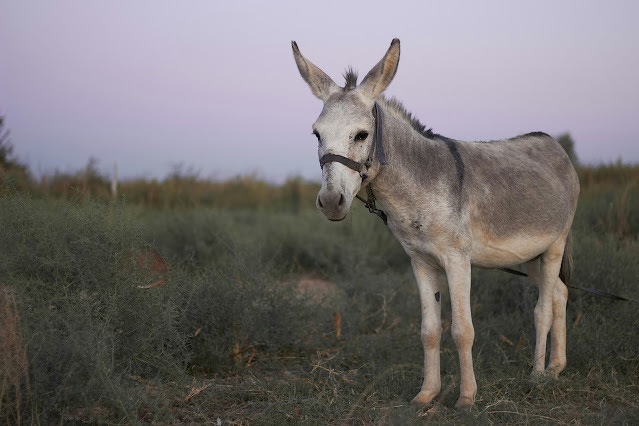
An angel blocks the road. The donkey sees it immediately and refuses to move. Balaam, displaying a type of horror movie situational awareness, beats his donkey three times. The donkey—conveniently female, because of course she is—finally speaks up: "Why are you beating me? Don't you see the angel in front of us?"
It's worth noting that Balaam's reaction to his donkey suddenly developing conversational skills is not shock, but rather a continued focus on his travel inconvenience. This suggests either that talking animals were more common than the text lets on, or that Balaam possessed the kind of tunnel vision that makes people walk into trees and glass doors while texting.
The symbolism here writes itself. The donkey—a creature society deems lowly and expendable—sees what the privileged court prophet cannot. She does her job dutifully, carrying Balaam and his belongings toward Moab, yet gets beaten for trying to protect them both. There's something devastating knowing that wisdom and divine vision come through the voice of the abused, not the powerful.
The angel's intervention serves as both rebuke and reminder: stop taking your frustration out on those who serve you, and maybe you'll actually see what's in front of you. It's a lesson about how anger and entitlement blind us to the sacred, delivered via a conversation between a man and his donkey that somehow manages to be both absurd and profound.
Then we hit the narrative equivalent of a brick wall.
The Israelite men arrive in Shittim—and yes, the name is as fitting as it sounds—where they "profane themselves by whoring" with Moabite women. The text presents this as moral failing rather than what it likely was: conquest and sexual violence. When armies of foreign men suddenly appear in your territory and start "whoring" with your women, enthusiastic consent isn't typically part of the equation. But the biblical narrative seems less concerned with the trauma of the Moabite women than with the Israelite men's subsequent idol worship of Baal Peor.
God's response is swift and brutal: a plague (likely an STI, if we're being practical about it) and orders Moshe to arrange mass execution. Shit hits the fan when one Israelite man brings a Moabite woman directly to the Tent of Meeting—essentially committing sacrilege in the most sacred space. Phinehas, Aaron's grandson, spears both of them through the belly, simultaneously ending the plague and any moral clarity I may have had for this text.
I understand having to read the text as itself, but I also live in the 21st century. Phinehas may be hailed as a hero for bringing an end to the plague, but I feel like its a reasonable ask whether his vigilante execution was really the best available solution. Penicillin would have been more effective and considerably less murderous (but admittedly, it was unavailable at the time).
This is a jarring tonal shift. We go from the darkly comic wisdom of Balaam's talking ass to this brutal religious violence. We're experiencing narrative whiplash, moving from a story about perception and humility to one about zealotry and slaughter. I'm left wondering if these were originally separate texts stitched together by particularly sadistic editor.
Although, that could be the point. Spiritual highs don't prevent ethical lows, and the juxtaposition of Balaam's blessing and the subsequent moral catastrophe suggests that. The same people who receive divine favor can still commit horrific acts (hint, hint, cough, cough). Blessing doesn't equal immunity from moral failure. If anything, it might make the fall more devastating.
The donkey's clear-eyed vision contrasts sharply with the Israelite's spiritual blindness that leads to violence and extremism with the Moabite women. She sees the angel because she has no agenda -- no want for riches or power, and no lust for conquest. The men at Shittim, by contrast, are so focused on their desires and conquests that they lose sight of everything else, including basic human decency. Even Balak first tempted Balaam to curse the Israelites with wealth and riches before God appeared and directed him to speak only what God told him to say.
Parashat Balak forces us to sit with uncomfortable questions about religious violence, divine justice, and the ways power corrupts even the blessed. It's a Torah portion that refuses to offer easy answers or pleasant resolutions. And that's life; sometimes the most profound truths come from the most unexpected voices, and sometimes the most sacred spaces become sites of horror.
I think that's why this portion feels so unsettling for me. It acknowledges that wisdom and brutality can coexist and that our tradition gives us talking donkeys as well as religious zealotry. It's a reminder that even sacred texts don't always tie up their loose ends with neat moral bows.
The donkey, at least, had the good sense to stop when she saw something ahead. The rest of us are still figuring out how to open our eyes.