
Parashat Devarim: Fear and the Art of Responsible Remembering
This is an important Torah portion, mishpachah! We arrive at Parashat Devarim, which is read on the Shabbat before Tisha B'Av—the minor holiday that marks the destruction of the Temple and has all the festive energy of a root canal. It's essentially Moshe's farewell address to the Israelites before entering Canaan, and before he enters whatever comes after: Heaven, the World to Come, the great IHOP in the Sky. Personally, I'm hoping the afterlife features unlimited Rooty Tooty Fresh and Fruity pancakes, but I'm on a cut and have never been 100% sure what happens afterward.
Full disclosure: I'm focusing less on the portion itself and more on its connection to Tisha B'Av, because holidays are where my amateur status becomes glaringly obvious. I'm not a scholar—I'm just someone figuring out what it means to be Jewish while maintaining a healthy skepticism about my own expertise. If I completely fuck this up, I'll write a correction next year (assuming I haven't been slapped down).
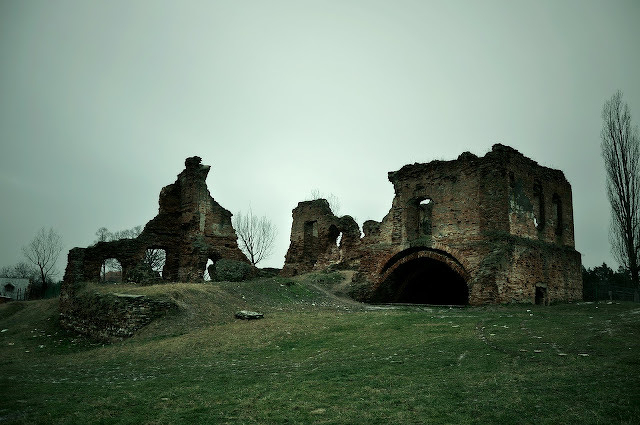
Historically, the Temple fell twice: first in 586 BCE, then again in 70 CE. Jews observe this destruction on the 9th of Av, followed by three weeks of mourning. It's sort of like a shorter and a longer Yom Kippur at the same time. It's a period of reflection on what we lost—not just architecturally, but philosophically. At the heart of both Moshe's speech and Tisha B'Av lies the devastating power of fear and its remarkable ability to unravel a society's future when faith and reason get into a slap fight.
Talmudic scholars argue that the First Great Collapse wasn't actually the Temple. It was the sin of the spies, which Moshe helpfully recounts during his farewell tour. "Remember when you insisted on doing recon work to spy on the Amorites despite my saying God would handle it?" he reminds them. "Yeah, that sucked." That entire generation spent forty years wandering the wilderness, unable to reach the Promised Land. Only Joshua and Caleb made it through—apparently they were the only ones who didn't panic when faced with uncertainty. Menschen, both of them.
It's the original Tisha B'Av: a day of disaster brought on by fear. Despite divine assurances ("God will fight for you") and empirical evidence ("just like God did in Egypt, which you literally witnessed"), fear trumped both faith and reason. The Israelites' terror of the unknown cost them their promised future.
This fear wasn't entirely irrational, though. Constant movement and homelessness after generations of bondage creates the kind of anxiety that turns you into a backseat driver. But Tisha B'Av also asks us to reflect on another type of devastation: the kind that comes from internalized fear.
The Second Temple fell to the Romans after the Jewish rebellion, launching two millennia of fear-based persecution: murder, enslavement, famine, civil war, and ultimately, the Holocaust. Judaism became the world's scapegoat, blamed for everything from market crashes to bad weather. There's no logic behind accusing Jews of controlling global finance or Hollywood (that's just capitalism in a flashier suit), but it's not like logic and antisemitism have ever been besties.
The rabbis have a term for this: sinat chinam—baseless hatred. It's fear of the "other," whether political, sectarian, or ideological. Like the first collapse, the Temple's destruction bred internal fear of communal disintegration. Distrust within the Jewish community made us vulnerable to scapegoating. Tisha B'Av becomes a day to mourn not just physical destruction, but the loss of unity that made us targets.
Rebuilding isn't exactly straightforward. But Tisha B'Av isn't designed as a pity party—it's about clarity. When Moshe addresses the Israelites, he doesn't erase their failures; he confronts them head-on. He reminds them (and us) to rise above fear and rebuild faith and reason from the ground up.
Nostalgia holds us back from rebuilding. Remember, nostalgia isn't the bittersweet memories of high school and college; it's a deep-seated longing or sadness for the past. That sadness roots our feet in place and prevents us from moving on and rebuilding. I've discovered that nostalgia is like alcohol: delightful in moderation with friends, occasionally leading to dramatic sobbing sessions, but problematic when you're getting shitfaced daily and alone. This Parashat advocates for responsible remembering, not nostalgia binging.
Moving forward is terrifying because the future refuses to provide spoilers. But Moshe, approaching his own finale, reminds the Israelites of their support system: his leadership, divine presence during conquests, and promises of continued guidance. They have evidence that rebuilding is possible and that faith provides sustainable growth rather than just wishful thinking.
This makes Tisha B'Av more than a mourning ritual. It's a starting point for reconstruction. The Hebrew word is teshuvah, meaning "return." We grieve what was lost, then focus on rebuilding without fear steering the ship.
Fear has this remarkable ability to override both faith and reason—impressive, considering they're usually at odds with each other. Great fear causes spectacular breakdowns: sending spies despite divine guarantees, blaming Jews for antisemitic conspiracy theories despite substantial research proving otherwise. Fear can unravel even the most reasonable and faithful minds, breeding the baseless hatred that destroys communities.
Fear unchallenged leads to collapse; faith and reason build resilience. Whether another temple will rise in my lifetime remains unclear, but this mourning period has value regardless. We can fast on Tisha B'Av to grieve what fear cost us, then recommit to a future shaped by what we learned from the rubble.
After all, if we're going to rebuild, we might as well do it right this time.