
On Not Getting Over It
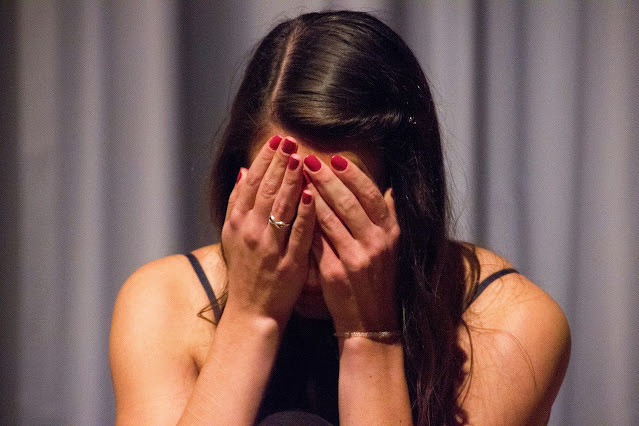
I had a spectacularly shitty week. It was the kind where Murphy's Law decides to throw a block party and invite all the worst neighbors.
First, I narrowly avoided something I'll call Miserable Thing—a looming catastrophe I'd been preparing for with the obsessive thoroughness of a doomsday prepper. I had Plans A through F, complete with sub-bullets for modifications. I'd closed my eyes at night and seen Miserable Thing heading toward me like a light rail. I went to Shabbat services and spotted it across the social hall, casually noshing on matzo. It haunted me until the day it simply skipped me and hit someone else instead -- someone who didn't deserve it any more than I did.
Then I got what was presumably an illegal Covid shot (don't ask how), had a nuclear immune reaction, and spent the next day glued to my couch like a fever-addled lamprey. Following that, I took an edible that was apparently engineered by the CIA, watched my thoughts detach from my skull and perform aerial maneuvers around the ceiling fan, and generally questioned every life choice that led to that moment. The week's grand finale came when someone I care about accidentally said something cruel enough to sting for days.
The only bright spot? The Naked Gun remake was pretty decent.
You'd think dodging Miserable Thing would bring relief. Instead, I found myself drowning in guilt—that particular Jewish craft where surviving something is akin theft. I kept remembering seventh grade, when I won a bag of store-brand popcorn for finishing an assignment first. The triumphant march to collect my prize morphed into a death walk back to my seat, accompanied by a chorus of classmate disapproval. I opened that bag and passed it around desperately, hoping shared wealth might restore my social standing. Because nothing explains adult anxiety about success quite like being an unpopular twelve-year-old.
Somewhere between the Covid fog and the cannabis mishap, my friend delivered this gem: "Maybe you need to get over your trauma."
Ah yes. Get over it. Why hadn't I thought of that? Forty-one years of accumulated damage, years of therapy, medication adjustments, and carefully constructed coping mechanisms—and the solution was simply getting over it this whole time. Brilliant.
Look, I understand that traumatized people can be exhausting. We come in various difficult flavors: the perpetually fragile who require constant gentle handling, the hard candy shells with soft centers that crack unexpectedly, the pressure cookers that explode when you're not paying attention. Sometimes it probably seems easier to just avoid us entirely rather than navigate our particular brands of brokenness.
But here's what I've learned after years of expensive therapy: trauma doesn't disappear. It doesn't pack its bags and leave after you've processed it sufficiently or reached some arbitrary milestone of functionality. Trauma is more like a permanent dysfunctional roommate—one you learn to live with, set boundaries around, and occasionally negotiate with when it gets too loud.
I think of myself as a volcano. All the anger, hurt, frustration, and fear I was told to bottle up stays deep in my core, churning like molten lava. I keep it contained until everyone least expects it, then erupt like Vesuvius, leaving people to wonder why I never mentioned I was upset. The answer, of course, is that I mentioned it constantly—just not in ways anyone recognized.
Therapy taught me that processing trauma doesn't mean pushing through it or achieving some pristine state of being "over it." It means understanding that this happened to me without letting it define me entirely. It means knowing why certain situations feel impossible, why some events make my skin crawl, and how to establish boundaries that keep me functional. Most importantly, it means accepting that I don't have to heal on anyone else's timeline.
The good news is that after this parade of awfulness, I'm still here. The Covid funk lifted, Miserable Thing is in the rearview mirror, and the person who suggested I get over my trauma has since apologized. I'm sleeping soundly again, at least until the next inevitable rough patch.
Because there will be a next time. Bad weeks happen to everyone, but some of us just have more elaborate internal weather systems. The difference is that now I know I can withstand it—not because I've transcended my damage, but because I've learned to work with it instead of against it.
And sometimes, that's the best any of us can do.