
The Day School Became a Verb
I have a book of daily writing prompts called "3000 Questions About Me," which sounds like either a job application for the worst marketing company or a narcissist's manifesto (joke's on you, it's both). A few times a week, I'll randomly flip to a question to get the creative juices flowing, hoping I don't land on something as existentially exhausting as "What does peace mean to you?" I haven't answered that one yet, but mentioning it probably just jinxed myself.
Today's question asked something like, "What moment in history shaped your life?" As an aging Elder Millennial—a demographic that sounds like I should be wearing a robe and dispensing wisdom from mountaintops—my first instinct was to write 9/11, duh. What other history-defining moment would there be for someone my age? I have regular conversations with friends just slightly younger than me where it dawns on me that they never existed in a world without 9/11, let alone remember it. I, of course, remember skipping school and watching that second plane hit the second tower, Matt Lauer's horrified voice trying to commentate something incomprehensible, the static that followed in my brain. Then I remember lying on my bed afterward, staring at the ceiling, thinking with remarkable clarity for a teenager: Nothing's ever going to be the same after this.
But that's still not the moment that shaped me, not according to this question. For that answer, I need to go back two years, to April 1999.
For me, there was life before Columbine, and life after Columbine.
Until college—except for those blissfully ignorant early elementary years before existential dread settles in like black mold—I hated school. I hated waking up early to pick out clothes my classmates would mock. I hated being forced to participate in classes when I just wanted to learn and absorb quietly. I hated the constant taunting from students who somehow never faced consequences, hated changing in gym class, hated the daily cafeteria geography of trying to find somewhere to eat without becoming a target.
I even hated getting good grades because they became just another weapon my tormentors could use against me. But at least, I told myself, the teachers were on my side. They wanted me to succeed. They wanted all their students to succeed. They offered help, guidance, and occasionally a sympathetic ear when I needed it most.
Then two boys walked into their suburban Denver high school, murdered their classmates and teachers, and suddenly the entire country lost its collective shit.
Overnight, everything changed. My high school went into full defensive mode, locking down every bathroom except the two closest to the office—a decision that made peeing between classes an exercise in time management and bladder control if your classroom was on the building's far side. Lockers and backpacks were searched routinely. Clothing was scrutinized. A select group of students got pulled out of class for "extra attention" from school counselors, though we all knew what that really meant.
The backlash was swift and relentless.
I don't remember exactly when students started calling in bomb threats, but I know the first few were taken seriously. Teachers evacuated us to stand outside, watching local police flood the building in waves. After forty-five minutes, they'd drag some kid out in handcuffs—usually from the auditorium or a janitor's closet—and that was the last we'd see of him. But after the fifth or sixth note left on a bathroom sink, we'd all become jaded. We'd roll our eyes while secretly celebrating getting out of geometry, or curse as we shivered coatless in the February freeze, waiting for the all-clear.
At one point, the school deactivated the pay phones to stop the prank calls, until parents complained about needing their children to be able to call them "in case of emergency"—meaning, in case of an actual bomb threat. The irony was lost on no one.
But the teachers' transformation was the worst part. When I returned that fall for sophomore year, I came back to darkness. The encouragement was gone. No more after-school help, no guidance, no words of sympathy beyond what their syllabi required. Like us, they were just showing up, getting through their day, hoping no one had brought a semi-automatic weapon to first hour.
In the years that followed, there would be four deadlier school shootings. Three made my stomach turn but couldn't match Columbine's initial shock—that is, until December 2012. But that's an essay for another time.
Just two weeks ago, there was another shooting. At another high school. In Colorado, again.
They happen so often now, so fast, that I find myself wondering which one will be this generation's defining moment. Or if any of them can break through the noise anymore. Maybe that's the most depressing realization of all—that we've become too numb to be shaped by tragedy, too familiar with lockdown drills and active shooter protocols to remember when school was just a place you went to learn.
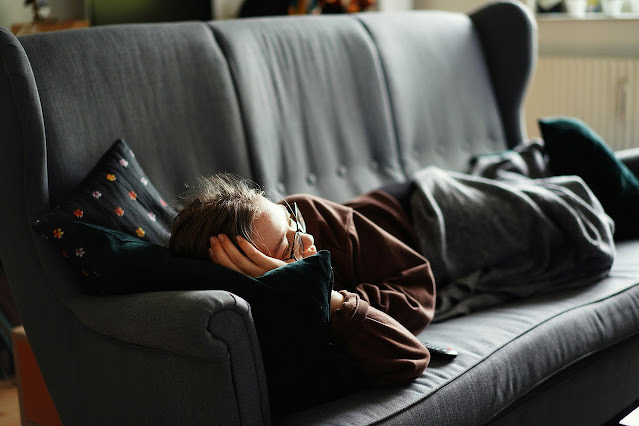
Sometimes I think about myself, almost 15-years-old, sitting on the couch in 1999, staring at the television after watching something unthinkable unfold. I had no idea I was witnessing the moment when "school shooting" would become as common in our vocabulary as "snow day"—and infinitely more frightening.