
Parashat Vayetzei: When Dreams Do the Heavy Lifting
Parashat Vayetzei gives us the origin story of the twelve tribes, though it's less Marvel Cinematic Universe and more "everyone makes questionable decisions based on dreams." Six tribes come from one woman who wasn't the first choice. Another comes from the favorite wife. The rest come from handmaidens who definitely didn't sign up for this particular job description. It's a parashat where dreams drive the plot forward with the narrative efficiency of a screenwriter who's running out of pages.
Let's start with Leah, matriarch of eldest daughters everywhere.
Jacob sees Rachel first—shapely and beautiful, as the text helpfully notes. Leah gets described as having "weak" or "tired" eyes, which is biblical for "she has a great personality." Jacob falls so hard for Rachel that seven years of labor feels like a long weekend. Then comes the morning-after plot twist: surprise, you married the wrong sister.
The real gut punch isn't the deception; it's what happens next. Jacob immediately negotiates another seven years to marry Rachel properly, just a week later. Imagine being Leah in that moment. Not chosen, not wanted, just there. A consolation prize with tired eyes.
As the eldest daughter who carries Leah as my Hebrew name, I feel this in my bones. She didn't choose this arrangement—her father decided her future while she got to live with the consequences. Yet she keeps hoping. After each son—Reuben, Simeon, Levi, Judah, later Issachar and Zebulun—she prays that maybe this time Jacob will see her. Maybe this time she'll be enough.
The text never tells us she gets what she wants.
But here's the thing about being second choice: sometimes you end up being the foundation. Leah's sons (plus those of her maidservant Zilpah) make up eight of the twelve tribes. Judah alone will produce King David, flawed as he is. While Leah dreams of Jacob's love, she becomes something else entirely—not an afterthought but a Matriarch, remembered not for being loved but for building a people.
Dreams in this parashat aren't just wishful thinking. They're narrative workhorses.
If you've seen Jacob's Ladder—and if you haven't, spoiler alert for a thirty-five-year-old movie—you know Tim Robbins plays a Vietnam vet haunted by visions of his dead son and constant suggestions that he's already deceased. Which, surprise, he is. The film's climax features a staircase into bright light, with pre-Home Alone Macaulay Culkin leading him up.
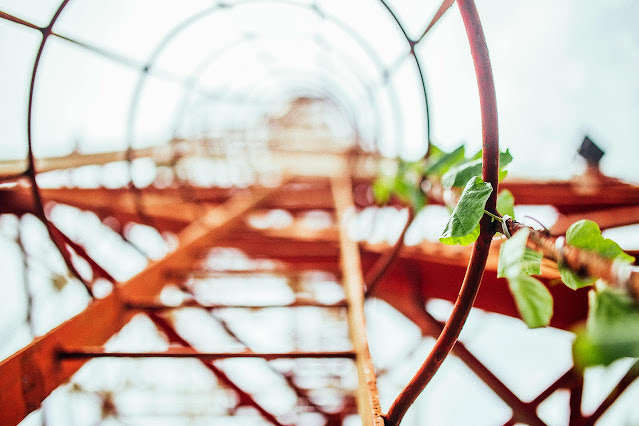
It's a darker take on our Jacob's desert vision. After falling asleep on a rock (the biblical equivalent of a highway rest stop), Jacob dreams of a cosmic escalator with divine messengers commuting between heaven and earth. It's either profound spiritual revelation or what happens when you're dehydrated in the desert. Ask anyone who's been to Burning Man.
This is where God renews the covenant, promising Jacob this land and descendants who will spread across the earth. "Wherever you go, I will lead you back to this promised land." Jacob wakes up, declares the place Beth-el (House of God), and heads off to Haran to marry Rachel and Leah and father a nation.
Later, when Jacob flees Laban with his wives, children, and considerable wealth, Laban has his own dream—God warning him not to harm Jacob. It's less mystical vision, more divine restraining order. Dreams as covenant, dreams as boundaries.
But which dream transforms the most? Jacob's celestial stairway that reaffirms divine promise? Laban's warning that establishes protective limits? Or Leah's unspoken longing that builds a legacy?
The answer is all of them, and none of them, and that's the point. Jacob's dream reminds us of our covenant. Laban's dream protects that covenant with boundaries. And Leah's dream—her stubborn hope in the face of rejection—creates the very people who will carry that covenant forward.
So may we, like Jacob, remember we're part of something larger. Like Laban, may we respect the boundaries that keep us whole (even when divinely mandated). And like Leah, may we build something lasting, even when—especially when—we feel unseen. Sometimes being second choice means you get to be the foundation. Sometimes tired eyes see farther than beautiful ones.