
2026
Watched: Hacks Season 2 🍿
OMG this was SO much better than Season 1. I started liking Ava more (though she’s not my favorite) and I even laughed at Kayla once or twice. Also, Devon Sawa popping up as Debra’s 40-something boy toy made my Millennial heart leap.
STOTT vs Balanced Body: Haven’t experienced STOTT in a studio yet, but I’m interested!
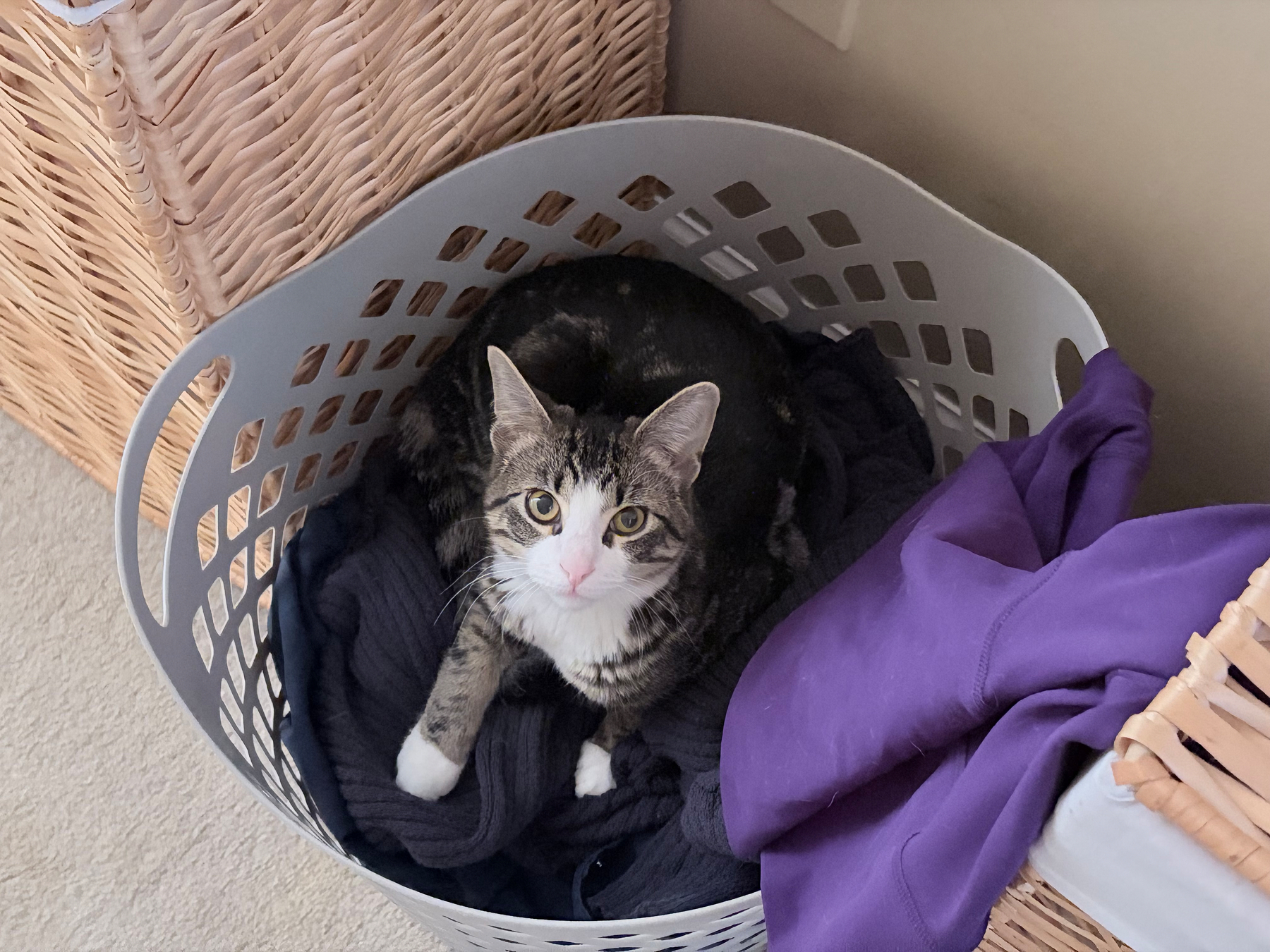
I adopted another cat this weekend – a mackerel tabby kitten. He is LITTLE – barely 6 months old and weighing in at roughly 5/6 lbs. He’s sweet and playful and two of his older siblings love him. The other is still unsure and a bit pissed off. But Felliway seems to be doing the trick. There’s one in the upstairs hallway and one in the living room where we all congregate the most.
I read complaints about Mariah Carey singing “Volare” at the Olympics and needing the phonetic pronunciation of the lyrics on teleprompters. “Why not get someone who speaks Italian? Lady Gaga! She speaks Italian! Why isn’t she here?”
Surprise! She’s at the Super Bowl.
In Search of Something Smutty to Read

I've spent eight months reading mob-themed erotica, and I need to unpack it.
Not because I'm embarrassed—though my 13-year-old self would be SHOCKED to discover what my 41-year-old self considers recreational reading. And not because I think these books are secretly good. They're not. They're objectively terrible: light on description unless someone's fucking, short on plot unless someone's measuring dick size, dialogue so stilted I started skipping pages like a frat boy fast-forwarding through PornHub ads.
No, I need to talk about them because I read six of these goddamn things, and I should probably figure out why.
This started innocently enough. I bought a Kindle Scribe earlier this year and went hunting for something fun. I devoured A Song of Achilles—masterful—and plowed through the mythological fantasy genre that scratched my Classics minor itch. Most were well-written and engaging, which is precisely what I want from books. I've abandoned too many novels I thought I should read—acclaimed science fiction, popular genre fiction, celebrity memoirs—only to accept I have very specific literary tastes. And when I read what I actually like, I get the urge to write.
After my Greek and Roman phase, I decided to browse Kindle Unlimited's free section for something to tickle different... interests.
Turns out that section is packed with romance novels. Not bodice-rippers. The stuff that makes bodice-rippers look quaint.
You know. Smut.
And wouldn't you know, I fell face-down—and ass-up, if we're being honest—into the most problematic possible sub-genre: forced marriage mob romance.
The plot is always identical: young woman gets forced into marriage with hot mob boss. He's obscenely rich, installs her in his mansion, gives her unlimited spending money. He kills people regularly, which is apparently very sexy. He's possessive and obsessive; she's meek but also strong-willed in that contradictory way these books never quite resolve. Maybe she's from a rival mob family and their marriage forges an alliance. Blah blah blah, she has to get pregnant, blah blah blah. Occasionally some actual mob activities interrupt the graphic sex.
If these aren't AI-generated, their authors are saving their real talent for other projects.
Yet I consumed six of them over eight months. Six.
What is wrong with me?
On one level, it's not that deep. I want sexy books with actual sex in them. I don't want Harlequin fade-to-black passionlessness or Victorian novels where horniness had to masquerade as propriety. I'm an adult with an imagination who wants stimulation at a reasonable price without watching real people being exploited on a screen. It makes perfect sense.
But here's what I've figured out through all this garbage: these books offer a judgment-free space to explore vulnerability.
In media criticism, there's text and subtext. With mob romance, the text is "forced marriage with violent mob boss." The subtext is "woman has wants and needs met by man with status and resources." Financial security. Physical satisfaction. Sexual fulfillment. Reliable housing. Social connections. It's outrageous, which is precisely why it's fantasy.
Do I actually want a violent, obsessive partner? Absolutely not—the thought is toxic and frightening. But I'm not fantasizing about the text. I'm fantasizing about the subtext.
Is this problematic? Obviously. I always tell people to question the media they consume, learn what it reveals about themselves, and reject the "let people enjoy things" cop-out. Critique everything while you enjoy it, and let others do the same.
Which is why, after a few months of this, I burned out completely.
So I picked up Sarah J. Maas's A Court of Thorns and Roses.
For a book tagged "faerie smut" and banned from Utah school libraries, it's remarkably tame on the hanky-panky. What it is is a genuinely excellent fantasy novel with intricate world-building and three-dimensional characters. The protagonist, Feyre, is independent, capable, intelligent—and notably not a virgin waiting to be deflowered by some well-hung fae. There's sex, sure. But it's not the scaffolding holding together a flimsy plot. It's a fantasy novel with sex in it.
You know. For adults.
I finished it within two weeks and immediately bought the rest of the series. I'm working through A Court of Mist and Fury now—spicier than the first, but still focused on character, plot, and world.
In my search for smut, I accidentally found great fantasy literature. Task failed successfully.
Parashat Shemot: Quiet Defiance and Reluctant Leaders

While reading Parashat Shemot, I realized—with a kind of dawning horror —that our foundational narrative doesn't start with a dramatic miracle. It opens with a Pharaoh doing what authoritarian leaders do best: oppressing, fearing, and slaughtering people whose only crime was existing in numbers that made him nervous. After flourishing as a people, the Israelites are rounded up, enslaved, and murdered. This wouldn't be the last time a dictator would perform this particular dance. History, like our sacred texts, has a terrifying habit of rhyming with itself.
If fascist regimes have any silver lining—and I use that term loosely—it's that they reliably produce those who refuse to normalize the unthinkable. Parashat Shemot, which means "Names," wastes no time showing us that resistance came swiftly. But here's what struck me: those who acted first weren't the ones with leadership seminars under their belts or "Chosen One" written on their name tags.
Redemption, it turns out, begins with the overlooked—those without titles, qualifications, or sometimes even names. Of course, I’m talking about women.
The first acts of defiance come from midwives who politely decline Pharaoh's infanticide order. An unnamed mother turns her baby's crib into a DIY boat. Her unnamed daughter becomes history's first lifeguard. Even Pharaoh's daughter—who isn't granted the courtesy of a name or even a proper title beyond "daughter"—decides that maybe, just maybe, letting babies die is where she draws her moral line.
These women don't hold press conferences or organize marches. They don't confront power directly or wait for divine reassurance. Their courage is practical, embodied, and comes with zero guarantees—not of safety, not of success, not even of historical recognition beyond "Moshe's mom" or "that princess." They save lives first and skip the part where they ask if they're qualified.
Which brings us to Moshe himself, whose response to divine calling reads like a masterclass in imposter syndrome. God appears as a burning bush—because apparently regular bushes lack flair—and Moshe's immediate reaction is to list his inadequacies. "Who am I? What if they don't believe me? I'm not good with words." (Relatable content for anyone who's ever been asked to speak at a meeting.) The women acted without these existential performance reviews. They just did.
This is fascinating juxtaposition. The overlooked figures teach us that moral courage doesn't require a title or a burning bush—just the willingness to act when action matters. Meanwhile, Moshe teaches us what happens when courage becomes leadership: it gets complicated, messy, and frankly exhausting.
When Moshe finally confronts Pharaoh with his famous "Let my people go" line, nothing goes to plan. Pharaoh doubles down on the oppression. The Israelites lose faith. Moshe himself turns to God with essentially "Why did you make things worse?" Anyone who's tried to fix a systemic problem will recognize that hopelessness.
This is what the midwives and mothers never had to experience—the grinding reality that leadership means staying to face the consequences. While they could act and fade back into anonymity, Moshe must endure the backlash, the doubt, the isolation, and the crushing weight of being responsible for an entire people's liberation. No wonder he tried to pass on that promotion.
Most of us, thankfully, won't be called to chat with flaming shrubbery or lead mass exoduses. But Parashat Shemot reminds us that we don't need those dramatic calls to refuse cruelty or protect the vulnerable. You don't need confidence to begin or authority to act. In fact, the most transformative courage often comes from those who feel least ready for it.
The parashat doesn't begin with miracles—it begins with people choosing basic decency within impossible systems. It suggests that the best leaders might be those who understand fear not because they've conquered it, but because they know it intimately. The overlooked create the conditions for change; the reluctant step forward to carry it through. Together, against all odds, they bend history toward freedom.
Even if they spend the entire time wondering if someone else might be better qualified for the job
New Year, Old Tactics

Happy New Year, everyone. I know I'm a day late and a dollar short, but I figured I'd sneak in before we get too far into 2026 and something inevitably catches fire—metaphorically or otherwise.
Last year was a masterclass in collective delusion. We watched an administration perfect the art of cruelty while calling it patriotism. Democrats perfected their own art: the theatrical hand-wring, followed by a shrug and a fundraising email. Meanwhile, our new Health Secretary is out here claiming vaccines cause autism and Tylenol is a government conspiracy, which would be hilarious if it weren't actively killing people.
I don't expect 2026 to improve. In fact, I'm fairly certain it'll be worse. But here's the thing—I'm done. Done explaining why seed oils won't assassinate you in your sleep. Done listening to the MAHA zealot in my Pilates class explain how Big Egg is poisoning us with arsenic while simultaneously arguing we need to "make more Americans." (The cognitive dissonance alone could power a small city.) And I'm especially done consoling Trump voters shocked to discover that voting for the Leopards Eating Faces Party resulted in—wait for it—leopards eating their faces.
So in 2026, I'm adopting a new strategy: militant bewilderment.
When Dad launches into his canola oil manifesto, I'll simply ask: "I've consumed canola oil for over forty years. Why am I still alive?" When he fumbles for an answer involving inflammation markers and YouTube doctors, I'll just say, "That sounds medically illiterate."
When Pilates Lady pivots from egg conspiracies to great replacement theory, I'll ask: "So you support immediate citizenship for all immigrants to boost our population?" As she sputters through the inevitable No, not like that! I'll press my finger to my chin and say, "You seem confused. Have you considered therapy?"
And for everyone now discovering that their actions have consequences—that their healthcare disappeared, their immigrant neighbors vanished, their families fractured—I'll offer this comfort: "This is what you voted for. Literally. With enthusiasm."
Call it my resolution: no more hope, no more hand-holding, just the small satisfaction of watching people choke on their own contradictions. It's not optimism, but it'll do.