
2025
Parashat Chukat: Desert Logic
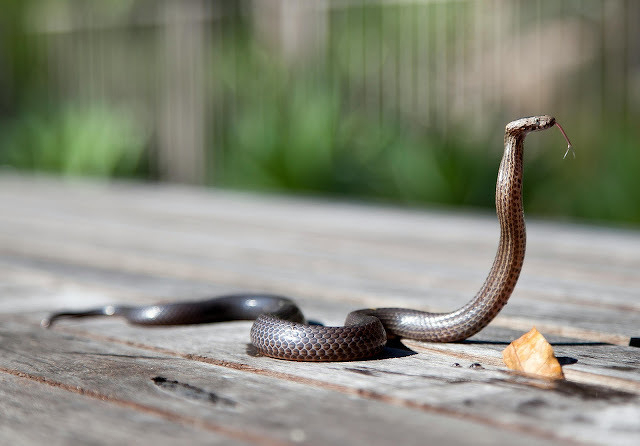
This week's Torah reading lands us back in familiar territory: the Israelites are still using MapQuest to wander the desert, still pursuing a Promised Land that remains tantalizingly out of reach. Both Miriam and Aaron die (spoiler alert for the Torah), but not before Aaron and Moshe get divine detention for showing insufficient reverence to God. The Israelites resume their regularly scheduled programming of complaints, divine retribution follows, repentance ensues. Rinse, repeat.
It feels like we're spinning our wheels in biblical sand.
Yet despite the narrative déjà vu, Parashat Chukat offers fresh contemplations that resist easy categorization—much like most worthwhile things in life.
The Red Heifer's Beautiful Absurdity
The ritual cleansing of corpse contamination requires mixing the ashes of a red heifer with water. The delicious irony? Those who prepare this purifying mixture become ritually impure themselves. This mitzvah falls under the category of chok—a commandment without clear rationale, or the theological equivalent of "because I said so."
We could dismiss this as ancient superstition, but that would miss the point entirely. Thanks to my own intimate relationship with OCD, I understand the power of inexplicable ritual. My Morning Routine (capitalized in my mental filing system like a proper noun deserving respect) serves no logical purpose beyond satisfying compulsion. Yet it anchors my day as surely as any ancient ceremony anchored a community.
Most of us maintain our own modest liturgies: the precise order of skincare products, the bedtime stories that must be read in exactly the right cadence, the family dinner conversations that follow unspoken scripts. These rituals don't require profound meaning to provide profound comfort. They create what anthropologists call "symbolic boundaries"—the sacred architecture of ordinary life.
The red heifer reminds us that not everything sacred demands understanding. We live in an age that fetishizes explanation, as if mystery were a personal failing rather than a fundamental condition of existence. Sometimes the meaning is the practice, not the comprehension of it. Sometimes the holiest act is accepting that we don't need to decode everything to receive its gifts.
Leadership's Impossible Standards
Poor Moshe. If biblical figures had therapists, his would charge double and need a therapist of her own. Every chapter presents the same impossible choice: face rebellion from his followers or face consequences from God. This week, he strikes a rock incorrectly—apparently even geological percussion has divine protocols—and God responds with the ultimate punishment: "No Promised Land for you!"
After a lifetime of service, this seems unequivocally harsh. But Moshe's story illuminates two uncomfortable truths about leadership that remain relevant whether you're guiding a wandering tribe or managing a marketing team.
First, the text never suggests Moshe is perfect. He errs, gets punished, repents, receives forgiveness—the full cycle of human fallibility. Yet God still entrusted him with liberating an entire people from slavery and shepherding them through decades of desert wandering. His humanity doesn't disqualify him from leadership; it humanizes leadership itself.
Second, leadership demands a different moral calculus. Moses's role doesn't require perfection, but it requires discipline and accountability at a higher standard. Those who accept positions of authority—whether over nations or book clubs—accept enhanced scrutiny as part of the job description. Leadership also demands that followers acknowledge the impossible position in which they've placed their leaders, recognizing that those who guide us remain frustratingly, irreducibly human.
Confronting Our Serpents
Here's another paradox that nearly escaped my attention while pondering mystical cattle: the bronze serpent that heals the very wounds inflicted by its living, venomous counterparts.
In therapy—that modern sanctuary where we practice our own rituals of purification—I've learned that confronting trauma is both the source of pain and the path through it. Sometimes simply acknowledging our serpents, looking them directly in their metaphorical eyes, constitutes the only progress possible. It's not glamorous work, this business of staring down our Basement Issues, but it transforms suffering from an active wound into a manageable scar.
The Israelites' healing comes not from avoiding their serpents but from facing a bronze representation of what harmed them. The source of their pain becomes their source of restoration—though I should note that trauma recovery rarely follows such tidy biblical logic. Real healing is messier, slower, and involves significantly more insurance paperwork and co-pays than divine intervention typically requires.
The Paradox of Progress
What strikes me most about this week's reading is its refusal to offer clean resolutions. We have purification rituals that contaminate their practitioners, leaders punished for minor infractions after lifetimes of service, and healing that comes through confronting rather than avoiding pain. These aren't neat moral lessons; they're accurate reflections of how spiritual and psychological growth actually works.
Perhaps that's the real revelation hidden in this seemingly repetitive narrative. Growth doesn't follow the linear progression we expect from crunchy self-help books or motivational Instagram posts. It circles back on itself, revisits familiar territory from new angles, finds meaning in apparent meaninglessness. Like the Israelites in their endless desert wandering, we discover that sometimes the journey's repetitions aren't evidence of being lost—they're proof that we're finally paying attention to where we've been all along.
The red heifer's ashes still don't make logical sense. Moshe still seems to get a raw deal. The bronze serpent still presents an unpleasant truth about healing. But maybe that's exactly the point: the most profound truths resist our desire to understand them completely, asking instead that we simply live them fully.
A Study in Friendship Asymmetry

I have never been anyone's best friend.
This isn't self-pity masquerading as insight. It's simply empirical data gathered over four decades of human interaction. I've had best friends, certainly, beginning with the usual elementary school alliances forged over shared snacks and maintained through playground politics. The problem was that I consistently mistook cooperation for collaboration and interpreted group project partnerships as lifelong bonds while my classmates saw them as temporary alliances of academic convenience.
"You can't play with us, Nina," they'd announce with the casual cruelty that only eight-year-olds can conjure. "You're weird." Fair enough. I was the kid who hung back with adult chaperones on field trips, genuinely curious about Mrs. Kowalski's mortgage payments and weekend pottery classes. By the end of our Henry Ford Museum tour, I'd nearly talked my way into a Saturday chardonnay-and-charcuterie girl's night invitation—impressive for a ten-year-old, though probably concerning in retrospect.
Middle school delivered my first real best friend via the anxious ritual of science class partner selection. When she shyly asked if I'd like to work together, my love-starved brain translated this as Would you like to attach yourself to my hip forever? Naturally, I said yes. For several blissful years, we achieved that rare middle school perfection: sleepovers, shared obsessions, coordinated mischief, and the occasional homework completion.
Then she discovered boys and ruined everything.
Our friendship became a study in asymmetry throughout high school. She pulled away toward the gravitational force of boyfriends and their social circles, leaving me to master the art of gracious abandonment. I hadn't considered what would happen when she started dating—perhaps I'd imagined she'd try it once, find it tedious, and call me immediately afterward to dissect the experience. Instead, I learned the particular sting of being relegated to backup friend, the one you call when your real plans fall through.
By senior year, we were strangers with a shared a history. She left for a big state college; I never saw her again.
College, mercifully, offered redemption through the formation of what I still consider the most meaningful friendships of my life. There was the woman I call my angel—rescued from the wreckage of a mutual friend's failed relationship, she remained after the dust settled. She's devastatingly perfect in ways that should inspire resentment but somehow don't. She volunteers at soup kitchens, works with disadvantaged children, rescues baby birds from window wells, and possesses that rare magnetism that draws people across rooms. I once drove five hours monthly just to bask in her effervescent presence.
Then there's my devil—we met at a party where we achieved the kind of spectacular intoxication that either destroys potential friendships or cements them forever. We chose the latter. She became my refuge from judgment, my partner in gleeful character assassination, my emotional rock through every crisis worth having. We've shared the kind of laughs that leave you breathless and the kind of tears that leave you empty. When either of us die, we've made the mutual vow of deleting each other's search history.
But here's the thing: I don't think I've been the best friend to either of them.
With both my angel and my devil—just like my childhood best friend—I eventually felt that familiar shift: the delicate recalibration where I begin doing the emotional heavy lifting. I reach out more, make plans, play host. Like a zipper with broken teeth, they pull away incrementally. First comes geographic distance, then months of unanswered texts, then years without visits. One has children now; I'm lucky to receive a monthly Instagram meme.
This happens to every adult—friendship entropy is a universal constant—but that doesn't diminish the particular ache of recognition.
Perhaps the problem is me. Perhaps I'm temperamentally suited for the periphery, destined to cheer from sidelines and offer crisis intervention while someone else handles the day-to-day emotional maintenance. Or maybe I've fundamentally misunderstood friendship itself. Maybe friendships aren't delicate flowers requiring constant watering and fertilizing, but resilient succulents that can sustain themselves through long periods of benign neglect.
Next time, I'd like to know what kind of garden I'm entering before I start planting seeds. Though knowing me, I'll probably show up with a watering can anyway, hoping this time will be different.
The Luxury of Being Unremarkable

Last month, I met a celebrity at a fancy hotel spa. Well, "met" is generous—we exchanged the kind of polite smile you'd give a fellow patron in line at the pharmacy. But in the hierarchy of celebrity encounters, this ranks somewhere between "accidentally stepped on Bradley Cooper's foot" and "shared an elevator with someone who was definitely on a local access TV commercial once."
I allow myself certain luxuries now, which feels like playing dress-up in someone else's life. This particular indulgence involves staying at one of those Chicago hotels where the towels are heavier than sourdough bread and the concierge knows 4 languages and that my German is A2 level at best. Last year, I celebrated my 40th birthday there with three friends—dinner, drinks, massages, the full bourgeois fantasy. This time was business-related, but I still snuck down to the spa for what they diplomatically called a "Himalayan restoration experience."
You know it's fancy when everything rubbed on your body comes with provenance. The CBD oil was lovingly harvested by a man who discovered cannabis after a life-changing accident—because apparently my shoulder tension requires a redemption arc. The singing bowls were designed to "center your chi," and the pumice stones promised to "reticulate the splines" of my very essence. I nodded along like someone who definitely knows what all of this means, when really I just wanted my neck to stop feeling like I'd slept like a collapsed marionette for six hours. Which, to be fair, I had.
The truth is, I still feel caught between worlds: the poverty of my youth and the relative comfort of my current life. I live frugally by most measures, but I indulge in the specific things I couldn't have when I wanted them most. At twelve, I slunk into school wearing my mom's stirrup pants well into the '90s, fantasizing about No Excuses jeans while my classmates had moved on to whatever came after No Excuses jeans. (Probably something equally regrettable like JNCO jeans, but with the crucial distinction of being regrettable now instead of regrettable then.)
These days, if I want to follow a trend, it's as simple as buying a Stanley Cup tumbler. I won't—I'm ride-or-die Team Yeti. But the point is I could. Still, every luxury purchase comes with a small voice asking, Is this okay?
And then I ran into an Oscar winner in terry cloth, and the voice quieted down.
I emerged from my massage in the required bathrobe uniform, clutching my complimentary champagne like a talisman of belonging. In the dim recovery lounge, a woman sat with her teenage daughter, both in matching spa robes and glowing with that post-massage serenity that costs $300 an hour. The woman had her phone out—technically against the rules—but I'm not the spa police, and frankly, celebrities operate under different bylaws.
As soon as she spoke, I knew. Her face is unmistakable if you've spent any portion of the last four decades consuming popular culture. I glanced over casually—the kind of look you'd give someone whose babbling non-stop in a darkened theater but don't want to lecture them—and confirmed what I already knew.
In person, stripped of red carpet armor, she was strikingly beautiful an effortless way that makes us mere mortals insecure in our skincare regiments. What struck me most was how normal she looked, which I promise isn't meant as an insult. She looked like someone you might see shopping at Target -- if Target shoppers regularly won Academy Awards and had access to personal trainers.
After a few minutes, she and her daughter headed to the saunas. Before leaving, we made eye contact, and she smiled—nothing performative, just human acknowledgment between two people in ridiculous bathrobes. I smiled back, calibrating my expression to convey "fellow spa patron" rather than "person who is mentally trolling through your filmography right now."
I could have followed them to the sauna area. The thought crossed my mind with the same impulse as wondering what if I just didn't show up to work tomorrow. But I'm not quite that brand of unhinged, and she was clearly off-duty, enjoying time with her family. Celebrities in the wild deserve the same consideration we'd want—the luxury of being unremarkable.
So I showered, dressed, and returned to my room with nothing but this story. No photo evidence, no name-dropping, no social media proof of my brush with fame. Just the quiet satisfaction of a moment when two people in overpriced bathrobes acknowledged each other's humanity.
Which, when you think about it, might be the most luxurious thing of all.
Existential Confusion as a Late-in-Life Attractive Person

I'm what you might call a late-in-life attractive person. I discovered this recently, though I'd harbored suspicions throughout my late thirties—those nagging doubts that require confirmation from someone not legally obligated to love you.
The transformation typically happens through one of three catalysts: you lose weight, you get in shape, or someone looks at you and goes, "Damn." For me, it was a combination of the first two, beginning five years ago when I started working out with something approaching consistency, grew my hair out, and developed what my therapist would generously call "increased self-confidence." People began to notice. My pants no longer fit around my waist—a development that, for once, felt like victory rather than defeat. Friends mentioned my "slimmer figure" with careful enthusiasm usually reserved for discussing someone's sobriety. Most tellingly, strangers began talking to me in public, and it didn't immediately annoy me.
But the true test of attractiveness isn't personal revelation. It's when the gatekeepers noticed and decide to let me in.
Recently, I turned 41 and treated myself to a facial and Botox, because apparently this is what passes for self-care in middle age. I left the clinic refreshed in that particular way that comes from having tiny needles strategically placed in your forehead, when someone yelled from a passing truck: "Girl, you better WATCH that ass!" I looked around for the intended recipient of this poetry, but the parking lot contained only me and a bewildered-looking Honda. Unless the man liked the curve of that Civic's quarter panels, he was yelling at me.
Later that day, at my Pilates class—where I go to perfect my form and pretend my hip flexors don't hate me—I mentioned my birthday to my instructor. She hugged me and bought me a pair of grippy socks as a present. Standing there in my new socks, having been publicly objectified and then privately celebrated within the span of just a few hours, I wondered: So, this is what it feels like to be attractive?
Because it really is when someone else tells you you're attractive that you become one of the Attractive Ones. It hits different when someone beautiful lays their metaphorical sword on your shoulder and says, "You're one of us." You've worked hard for something that required no particular accomplishment—a participation trophy for simply showing up to your own life with better posture.
This became clear when I mentioned to my Pilates instructor my aspirations to teach. She responded with enthusiasm usually reserved for discovering a twenty-dollar bill in an old coat pocket, explaining that they were always short on instructors and that I had "the look." The look, apparently, being more important than my ability to nail a teaser without breaking concentration.
The strange thing is, I don't think I was ever particularly unattractive; I just didn't like myself very much. No one ever called me unattractive as an adult, but no one stopped traffic to call me attractive, either. I received acknowledgment as "pretty" and "cute," which are the participation trophies of compliments—nice enough, but hardly the stuff of romantic comedies. It's funny how these designations can shift seemingly overnight, and how they can change at an age when you thought all your aesthetic dice had already been cast.
I'm slightly resentful that this didn't happen when I was ten to fifteen years younger and could have enjoyed more time in what apparently qualifies as a "hotter, sexier body." There's something vaguely insulting about the universe's timing—a promotion offered just as you're planning to retire.
Because attractiveness doesn't last, I don't know how long I have. Because attractiveness is subjective, I don't know if this is an elaborate delusion supported by a particularly flattering athleisure and good lighting. Because attractiveness has its downsides—as any woman who's been yelled at in a parking lot can attest—I don't know what I've had to sacrifice, or will have to sacrifice, for this dubious privilege.
But I'll enjoy it while it lasts, grippy socks and all. After forty-one years of flying under the radar, I suppose there's something to be said for finally being seen—even if it took this long to become worth looking at.