
Watched: Hacks Season 2 🍿
OMG this was SO much better than Season 1. I started liking Ava more (though she’s not my favorite) and I even laughed at Kayla once or twice. Also, Devon Sawa popping up as Debra’s 40-something boy toy made my Millennial heart leap.
STOTT vs Balanced Body: Haven’t experienced STOTT in a studio yet, but I’m interested!
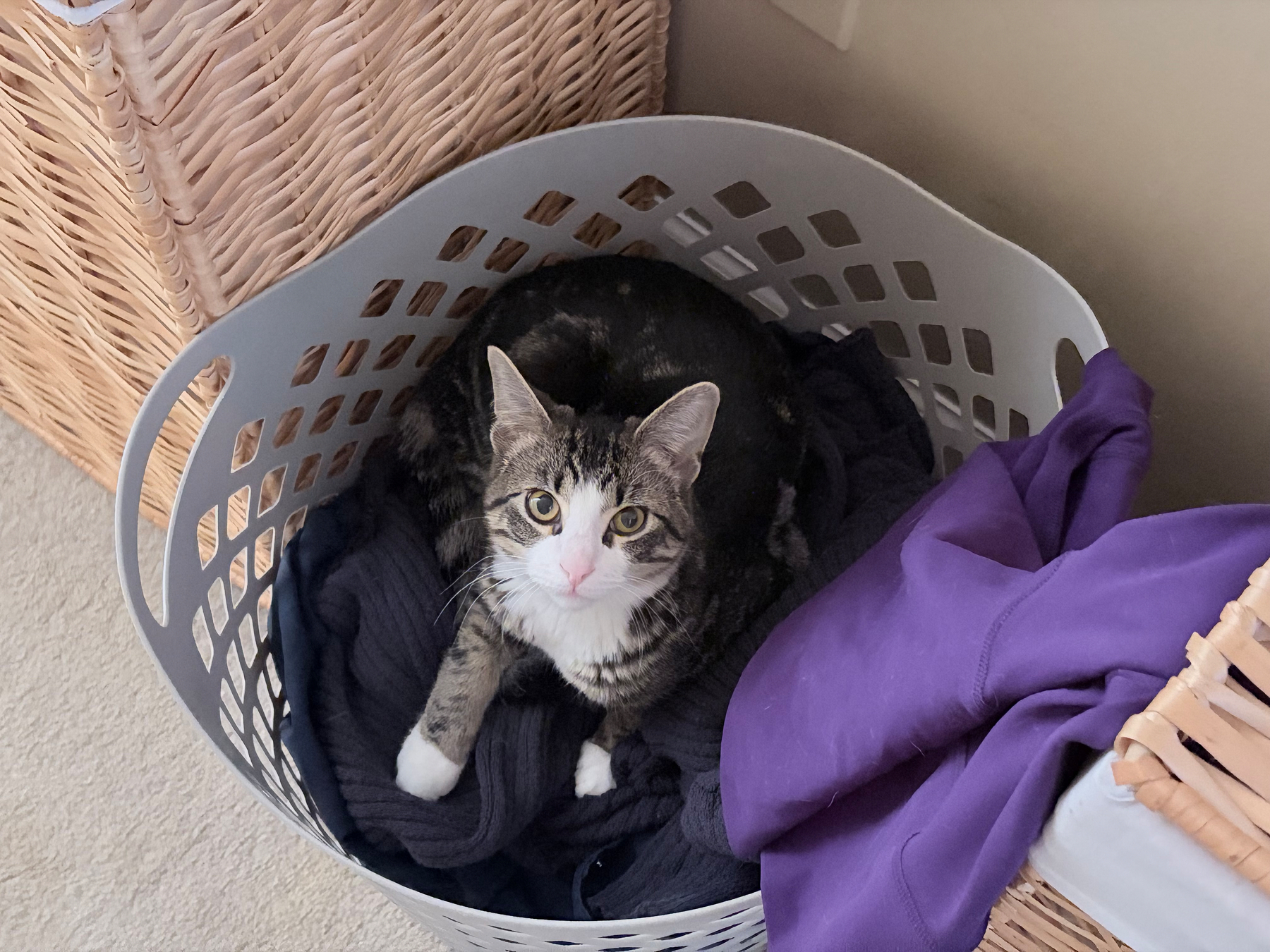
I adopted another cat this weekend – a mackerel tabby kitten. He is LITTLE – barely 6 months old and weighing in at roughly 5/6 lbs. He’s sweet and playful and two of his older siblings love him. The other is still unsure and a bit pissed off. But Felliway seems to be doing the trick. There’s one in the upstairs hallway and one in the living room where we all congregate the most.
I read complaints about Mariah Carey singing “Volare” at the Olympics and needing the phonetic pronunciation of the lyrics on teleprompters. “Why not get someone who speaks Italian? Lady Gaga! She speaks Italian! Why isn’t she here?”
Surprise! She’s at the Super Bowl.
In Search of Something Smutty to Read

I've spent eight months reading mob-themed erotica, and I need to unpack it.
Not because I'm embarrassed—though my 13-year-old self would be SHOCKED to discover what my 41-year-old self considers recreational reading. And not because I think these books are secretly good. They're not. They're objectively terrible: light on description unless someone's fucking, short on plot unless someone's measuring dick size, dialogue so stilted I started skipping pages like a frat boy fast-forwarding through PornHub ads.
No, I need to talk about them because I read six of these goddamn things, and I should probably figure out why.
This started innocently enough. I bought a Kindle Scribe earlier this year and went hunting for something fun. I devoured A Song of Achilles—masterful—and plowed through the mythological fantasy genre that scratched my Classics minor itch. Most were well-written and engaging, which is precisely what I want from books. I've abandoned too many novels I thought I should read—acclaimed science fiction, popular genre fiction, celebrity memoirs—only to accept I have very specific literary tastes. And when I read what I actually like, I get the urge to write.
After my Greek and Roman phase, I decided to browse Kindle Unlimited's free section for something to tickle different... interests.
Turns out that section is packed with romance novels. Not bodice-rippers. The stuff that makes bodice-rippers look quaint.
You know. Smut.
And wouldn't you know, I fell face-down—and ass-up, if we're being honest—into the most problematic possible sub-genre: forced marriage mob romance.
The plot is always identical: young woman gets forced into marriage with hot mob boss. He's obscenely rich, installs her in his mansion, gives her unlimited spending money. He kills people regularly, which is apparently very sexy. He's possessive and obsessive; she's meek but also strong-willed in that contradictory way these books never quite resolve. Maybe she's from a rival mob family and their marriage forges an alliance. Blah blah blah, she has to get pregnant, blah blah blah. Occasionally some actual mob activities interrupt the graphic sex.
If these aren't AI-generated, their authors are saving their real talent for other projects.
Yet I consumed six of them over eight months. Six.
What is wrong with me?
On one level, it's not that deep. I want sexy books with actual sex in them. I don't want Harlequin fade-to-black passionlessness or Victorian novels where horniness had to masquerade as propriety. I'm an adult with an imagination who wants stimulation at a reasonable price without watching real people being exploited on a screen. It makes perfect sense.
But here's what I've figured out through all this garbage: these books offer a judgment-free space to explore vulnerability.
In media criticism, there's text and subtext. With mob romance, the text is "forced marriage with violent mob boss." The subtext is "woman has wants and needs met by man with status and resources." Financial security. Physical satisfaction. Sexual fulfillment. Reliable housing. Social connections. It's outrageous, which is precisely why it's fantasy.
Do I actually want a violent, obsessive partner? Absolutely not—the thought is toxic and frightening. But I'm not fantasizing about the text. I'm fantasizing about the subtext.
Is this problematic? Obviously. I always tell people to question the media they consume, learn what it reveals about themselves, and reject the "let people enjoy things" cop-out. Critique everything while you enjoy it, and let others do the same.
Which is why, after a few months of this, I burned out completely.
So I picked up Sarah J. Maas's A Court of Thorns and Roses.
For a book tagged "faerie smut" and banned from Utah school libraries, it's remarkably tame on the hanky-panky. What it is is a genuinely excellent fantasy novel with intricate world-building and three-dimensional characters. The protagonist, Feyre, is independent, capable, intelligent—and notably not a virgin waiting to be deflowered by some well-hung fae. There's sex, sure. But it's not the scaffolding holding together a flimsy plot. It's a fantasy novel with sex in it.
You know. For adults.
I finished it within two weeks and immediately bought the rest of the series. I'm working through A Court of Mist and Fury now—spicier than the first, but still focused on character, plot, and world.
In my search for smut, I accidentally found great fantasy literature. Task failed successfully.
Parashat Shemot: Quiet Defiance and Reluctant Leaders
While reading Parashat Shemot, I realized—with a kind of dawning horror —that our foundational narrative doesn't start with a dramatic miracle. It opens with a Pharaoh doing what authoritarian leaders do best: oppressing, fearing, and slaughtering people whose only crime was existing in numbers that made him nervous. After flourishing as a people, the Israelites are rounded up, enslaved, and murdered. This wouldn't be the last time a dictator would perform this particular dance. History, like our sacred texts, has a terrifying habit of rhyming with itself.
If fascist regimes have any silver lining—and I use that term loosely—it's that they reliably produce those who refuse to normalize the unthinkable. Parashat Shemot, which means "Names," wastes no time showing us that resistance came swiftly. But here's what struck me: those who acted first weren't the ones with leadership seminars under their belts or "Chosen One" written on their name tags.
Redemption, it turns out, begins with the overlooked—those without titles, qualifications, or sometimes even names. Of course, I’m talking about women.
The first acts of defiance come from midwives who politely decline Pharaoh's infanticide order. An unnamed mother turns her baby's crib into a DIY boat. Her unnamed daughter becomes history's first lifeguard. Even Pharaoh's daughter—who isn't granted the courtesy of a name or even a proper title beyond "daughter"—decides that maybe, just maybe, letting babies die is where she draws her moral line.
These women don't hold press conferences or organize marches. They don't confront power directly or wait for divine reassurance. Their courage is practical, embodied, and comes with zero guarantees—not of safety, not of success, not even of historical recognition beyond "Moshe's mom" or "that princess." They save lives first and skip the part where they ask if they're qualified.
Which brings us to Moshe himself, whose response to divine calling reads like a masterclass in imposter syndrome. God appears as a burning bush—because apparently regular bushes lack flair—and Moshe's immediate reaction is to list his inadequacies. "Who am I? What if they don't believe me? I'm not good with words." (Relatable content for anyone who's ever been asked to speak at a meeting.) The women acted without these existential performance reviews. They just did.
This is fascinating juxtaposition. The overlooked figures teach us that moral courage doesn't require a title or a burning bush—just the willingness to act when action matters. Meanwhile, Moshe teaches us what happens when courage becomes leadership: it gets complicated, messy, and frankly exhausting.
When Moshe finally confronts Pharaoh with his famous "Let my people go" line, nothing goes to plan. Pharaoh doubles down on the oppression. The Israelites lose faith. Moshe himself turns to God with essentially "Why did you make things worse?" Anyone who's tried to fix a systemic problem will recognize that hopelessness.
This is what the midwives and mothers never had to experience—the grinding reality that leadership means staying to face the consequences. While they could act and fade back into anonymity, Moshe must endure the backlash, the doubt, the isolation, and the crushing weight of being responsible for an entire people's liberation. No wonder he tried to pass on that promotion.
Most of us, thankfully, won't be called to chat with flaming shrubbery or lead mass exoduses. But Parashat Shemot reminds us that we don't need those dramatic calls to refuse cruelty or protect the vulnerable. You don't need confidence to begin or authority to act. In fact, the most transformative courage often comes from those who feel least ready for it.
The parashat doesn't begin with miracles—it begins with people choosing basic decency within impossible systems. It suggests that the best leaders might be those who understand fear not because they've conquered it, but because they know it intimately. The overlooked create the conditions for change; the reluctant step forward to carry it through. Together, against all odds, they bend history toward freedom.
Even if they spend the entire time wondering if someone else might be better qualified for the job
New Year, Old Tactics

Happy New Year, everyone. I know I'm a day late and a dollar short, but I figured I'd sneak in before we get too far into 2026 and something inevitably catches fire—metaphorically or otherwise.
Last year was a masterclass in collective delusion. We watched an administration perfect the art of cruelty while calling it patriotism. Democrats perfected their own art: the theatrical hand-wring, followed by a shrug and a fundraising email. Meanwhile, our new Health Secretary is out here claiming vaccines cause autism and Tylenol is a government conspiracy, which would be hilarious if it weren't actively killing people.
I don't expect 2026 to improve. In fact, I'm fairly certain it'll be worse. But here's the thing—I'm done. Done explaining why seed oils won't assassinate you in your sleep. Done listening to the MAHA zealot in my Pilates class explain how Big Egg is poisoning us with arsenic while simultaneously arguing we need to "make more Americans." (The cognitive dissonance alone could power a small city.) And I'm especially done consoling Trump voters shocked to discover that voting for the Leopards Eating Faces Party resulted in—wait for it—leopards eating their faces.
So in 2026, I'm adopting a new strategy: militant bewilderment.
When Dad launches into his canola oil manifesto, I'll simply ask: "I've consumed canola oil for over forty years. Why am I still alive?" When he fumbles for an answer involving inflammation markers and YouTube doctors, I'll just say, "That sounds medically illiterate."
When Pilates Lady pivots from egg conspiracies to great replacement theory, I'll ask: "So you support immediate citizenship for all immigrants to boost our population?" As she sputters through the inevitable No, not like that! I'll press my finger to my chin and say, "You seem confused. Have you considered therapy?"
And for everyone now discovering that their actions have consequences—that their healthcare disappeared, their immigrant neighbors vanished, their families fractured—I'll offer this comfort: "This is what you voted for. Literally. With enthusiasm."
Call it my resolution: no more hope, no more hand-holding, just the small satisfaction of watching people choke on their own contradictions. It's not optimism, but it'll do.
Parashat Vayetzei: When Dreams Do the Heavy Lifting

Parashat Vayetzei gives us the origin story of the twelve tribes, though it's less Marvel Cinematic Universe and more "everyone makes questionable decisions based on dreams." Six tribes come from one woman who wasn't the first choice. Another comes from the favorite wife. The rest come from handmaidens who definitely didn't sign up for this particular job description. It's a parashat where dreams drive the plot forward with the narrative efficiency of a screenwriter who's running out of pages.
Let's start with Leah, matriarch of eldest daughters everywhere.
Jacob sees Rachel first—shapely and beautiful, as the text helpfully notes. Leah gets described as having "weak" or "tired" eyes, which is biblical for "she has a great personality." Jacob falls so hard for Rachel that seven years of labor feels like a long weekend. Then comes the morning-after plot twist: surprise, you married the wrong sister.
The real gut punch isn't the deception; it's what happens next. Jacob immediately negotiates another seven years to marry Rachel properly, just a week later. Imagine being Leah in that moment. Not chosen, not wanted, just there. A consolation prize with tired eyes.
As the eldest daughter who carries Leah as my Hebrew name, I feel this in my bones. She didn't choose this arrangement—her father decided her future while she got to live with the consequences. Yet she keeps hoping. After each son—Reuben, Simeon, Levi, Judah, later Issachar and Zebulun—she prays that maybe this time Jacob will see her. Maybe this time she'll be enough.
The text never tells us she gets what she wants.
But here's the thing about being second choice: sometimes you end up being the foundation. Leah's sons (plus those of her maidservant Zilpah) make up eight of the twelve tribes. Judah alone will produce King David, flawed as he is. While Leah dreams of Jacob's love, she becomes something else entirely—not an afterthought but a Matriarch, remembered not for being loved but for building a people.
Dreams in this parashat aren't just wishful thinking. They're narrative workhorses.
If you've seen Jacob's Ladder—and if you haven't, spoiler alert for a thirty-five-year-old movie—you know Tim Robbins plays a Vietnam vet haunted by visions of his dead son and constant suggestions that he's already deceased. Which, surprise, he is. The film's climax features a staircase into bright light, with pre-Home Alone Macaulay Culkin leading him up.
It's a darker take on our Jacob's desert vision. After falling asleep on a rock (the biblical equivalent of a highway rest stop), Jacob dreams of a cosmic escalator with divine messengers commuting between heaven and earth. It's either profound spiritual revelation or what happens when you're dehydrated in the desert. Ask anyone who's been to Burning Man.
This is where God renews the covenant, promising Jacob this land and descendants who will spread across the earth. "Wherever you go, I will lead you back to this promised land." Jacob wakes up, declares the place Beth-el (House of God), and heads off to Haran to marry Rachel and Leah and father a nation.
Later, when Jacob flees Laban with his wives, children, and considerable wealth, Laban has his own dream—God warning him not to harm Jacob. It's less mystical vision, more divine restraining order. Dreams as covenant, dreams as boundaries.
But which dream transforms the most? Jacob's celestial stairway that reaffirms divine promise? Laban's warning that establishes protective limits? Or Leah's unspoken longing that builds a legacy?
The answer is all of them, and none of them, and that's the point. Jacob's dream reminds us of our covenant. Laban's dream protects that covenant with boundaries. And Leah's dream—her stubborn hope in the face of rejection—creates the very people who will carry that covenant forward.
So may we, like Jacob, remember we're part of something larger. Like Laban, may we respect the boundaries that keep us whole (even when divinely mandated). And like Leah, may we build something lasting, even when—especially when—we feel unseen. Sometimes being second choice means you get to be the foundation. Sometimes tired eyes see farther than beautiful ones.
When Words Stop Working

In linguistics, words evolve along predictable paths. There's amelioration, where words improve over time—"bad" now means both terrible and smoking hot, depending on your inflection. Then there's pejoration, the far more common descent into darkness, where innocent bundles of sticks and clinical terms become slurs I won't type here.
But there's a third evolution that's less academic and more vibes-based: semantic bleaching. Words lose their punch entirely. "Awesome" once meant genuinely awe-inspiring; now it's what you say when someone brings donuts to the office.
Take "unhoused," a term that's been bothering me lately. Not because housing isn't a crisis—five states have over 10,000 people sleeping outside, rents have skyrocketed since 2013, and somehow we're building apartments no one can afford. The problem is that "unhoused" makes it sound like people just misplaced their houses, like they left them in their other purse.
Let's be real. This country doesn't have an "unhoused population" problem. It has a homelessness crisis caused by addiction, mental illness, domestic violence, medical bankruptcy, unemployment, and a housing market that requires selling organs to make rent. These people weren't "unhoused"—they were systematically excluded from housing. The passive voice lets the system off the hook.
Which brings me to another phrase that's been bleached of all meaning: body shaming.
Originally, this term had teeth. It called out the systematic discrimination against larger bodies—the limited clothing options, the medical bias, the employment discrimination. It named something real and harmful.
But then something Wicked happened. Or rather, the Wicked discourse happened, where suddenly commenting on Ariana Grande and Cynthia Erivo's appearances became "body shaming." The internet exploded with concern trolling disguised as health worry: Are they on Ozempic? Do they have eating disorders? Are they crying because they're hungry?
Here's the thing: there's no systemic shame in being thin. Thin bodies—preferably white, European ones—have been the beauty standard since forever. BBLs and curves might trend, but slenderness always returns as the default. You can't "shame" someone for meeting the beauty standard any more than you can shame someone for being rich. The system that creates these standards? That's shameful. The women trying to promote their movie while existing in bodies? Not so much.
I've been there. A few years ago, I lost thirty pounds through exercise and felt fantastic—cheekbones emerged, obliques appeared, pants needed belts. Then I moved cross-country and stress withered away another ten pounds. The difference was stark: suddenly I looked like a Victorian consumptive, all clavicles and countable ribs. But nobody shamed me. If anything, people asked for my "secret."
We can't diagnose celebrities through screens. Maybe Grande and Erivo have disordered eating. Maybe they're stressed from endless press tours. Maybe their bodies just respond to pressure this way. But calling speculation about thin bodies "body shaming" dilutes a term that once described actual discrimination. Fatphobia is real—it affects healthcare, employment, basic dignity. That's not the same as your aunt making snippy comments about second helpings.
This is what semantic bleaching does: it takes words with specific, important meanings and stretches them until they snap. "Awesome" for everything positive. "Unhoused" for a systemic failure. "Body shaming" for any observation about any body, regardless of context or power dynamics.
Language evolves—that's inevitable. But when we let important words dissolve into semantic mush, we lose the ability to name real problems. And if we can't name them, we certainly can't fix them. Sometimes a word isn't just a word; it's a tool. And right now, we're letting our tools go dull.
Nobody Wants This, But Everybody Does
The second season of "Nobody Wants This" just dropped on Netflix, which means we're back to watching a hot rabbi chase after a problematic shiksa goddess while the show can't decide if it's Reform, Conservative, or just LA Jewish. Despite its overarching themes of personal growth and leaving baggage behind, it manages to depict Jewish women as walking Yiddish dictionaries with volume control issues. It's a shanda. Skip it.
But I'm not here to talk about the show. I'm here to talk about its star, Kristen Bell, who recently celebrated her wedding anniversary by posting a photo of husband Dax Shepard with this caption: "Happy anniversary to the man who once said, 'I would never kill you. A lot of men have killed their wives at a certain point. Even though I'm heavily incentivized to kill you, I never would.'"
The timing? Chef's kiss. Right before her show's promotional tour. During October. Which happens to be Domestic Violence Awareness Month.
Not a good look, Boris.
For context: Bell is Detroit royalty to me. We grew up miles apart (Oakland vs Wayne County—practically neighbors by Michigan standards). She gave us Veronica Mars, voiced Anna in those Frozen movies that parents pretend to love, and absolutely ate and left no crumbs in The Good Place. But most importantly, she was Mary Lane in Reefer Madness, which automatically grants her lifetime cool points in my book.
Her husband? Also Michigan stock. You know Dax Shepard from his "Armchair Expert" podcast, various forgettable comedies, and as Ashton Kutcher's accomplice on Punk'd—that early 2000s fever dream where they'd gaslight celebrities into thinking they'd committed vehicular manslaughter for entertainment.
As a couple, Bell and Shepard have made oversharing their brand. What started as relatable charm (he surprised her with a sloth!) devolved into bizarre TMI territory. Hygiene confessions. Protein shake incidents. A towel-related fight that ended in a blackout. They're that couple you reluctantly invite to parties because you only like one of them, but they're a package deal. Three hours later, one's monopolizing conversations while the other maintains a rictus grin, and you know they'll have a blowout fight in the car about Why do you always do this?
Here's the thing about gallows humor between partners: context is everything. I have twisted inside jokes with my spouse that would require a PowerPoint presentation and several apologies to explain to outsiders. But—and this is crucial—I don't share them on Instagram to my 15 million followers. Even my double-digit followers are thankful I don't make that mistake.
The first rule of comedy mirrors the first rule of writing: know your audience. What lands between two people with years of shared context rarely translates to the general public. Bell forgot this fundamental truth when she decided her husband's domestic violence non sequitur needed to be immortalized online.
Do I think Bell intentionally posted during DV Awareness Month? Please. October is the awareness month for approximately 47 different causes, and nobody's that plugged into the cultural calendar. She posted a dumb picture with a dumb caption about a dumb inside joke. Are there concerning patterns in their relationship that merit discussion? Maybe, but that's none of our business. Despite my projections, I don't know these people. They could be lovely. They could be narcissistic nightmares. They're probably just Michigan kids who got famous and lost their filter somewhere along Ventura Boulevard, the PCH, the 404 or any other highway I remember from those Californians sketches.
"Everything I learn about celebrities is against my will" is almost never true. We click the headlines. We read the think pieces. Hell, we write blog posts dissecting their Instagram captions like they're Talmudic commentary. We pretend we don't want this content while consuming it like ritual offerings.
Nobody wants this? Wrong. Everybody does. We just hate ourselves for wanting it.
A Field Guide to Bad Automotive Decisions

I need to tell you about The Protagonist and her terrible taste in vehicles. The Protagonist is someone I know extremely well, which makes this story both educational and humiliating.
As I hurtle through middle age as an attractive corpse, I feel obligated to share this cautionary tale with the youth. Consider it community service.
In 2004, the Protagonist bought a 1984 Pontiac Fiero. If you don't know what that is, it was a really cool car—for 1984. For 2004, it was a twenty-year-old lemon, especially the one our feckless Protagonist purchased. This one was weathered and pock-marked with rust. The fuel pump didn't work, the brakes were shot, and it barely ran. But she loved this car and couldn't wait to get it road-worthy.
Her family warned her against such an expense. "Are you sure you want to do this?" we said. "This looks like a project."
"No, you see—I can't wait to get it running! It just needs a few things: some buffing, an oil change, and new brake pads. Eventually, we're going to go driving all over the place! It has so much potential."
"Okay," we relented. "If you're sure that's what you want to do."
Over the next four years, the Protagonist tried and failed repeatedly to keep that Fiero on the road. She replaced its fuel pump. She bought new brakes. She even tried a whole new paint job. But even after pouring thousands of dollars into it, that car found new ways to disappoint or enrage her. It would break down at the side of the road and refuse to budge. Or its brakes would fail and it would careen into things.
One day, she muttered, "That fucking car. All it does is cost me money. It's never going to run the way I want it to."
"No, I guess not," I said. "It's an old car and sometimes they're not going to run well."
Finally, in 2008—after a valiant four years of effort and money—she divorced that Fiero.
#
Later that year, she found another car: a sturdy, dependable Jeep Wrangler. It was newer and actually ran, which already made it the most functional relationship she'd had.
We all were fond of the Jeep. It was pretty robust and sturdy; bigger and tougher. It ran, thankfully, and had all of its parts working. We went places in it and had fun driving around. The Protagonist appreciated its ruggedness, the sense of freedom it gave her.
But sometimes, the Jeep was a bit unstable. Like if the wind blew too hard, we got the feeling it would tip over.
The Protagonist would tell us, "Yeah, I was driving the Jeep drunk again the other night and tipped it over. My bad." And we'd go, "Are you sure you're okay? Maybe talk to someone about how often you drink and how often the Jeep tips over?"
"Thanks, but we're fine," she insisted.
In fairness to the Protagonist, she kept the Jeep for longer than any car. But ten years later, she decided she didn't want to renew her lease.
"Is it because of the tipping over issues?" I asked.
"No, it's because I'm bored with it." She shrugged. "And the radio only plays Jordan Peterson podcasts now."
Okay, that made sense.
# A couple of years passed. The Protagonist rented a few cars in that period. Then one day, she announced that she had purchased a big, dumb pickup truck
We were astounded. Of all the cars she had purchased, leased, and rented, this was her worst by far. The truck was a useless frame, wheel-less on cinder blocks in her front yard—no steering wheel, no driveshaft, no transmission, and no headlights. The truck had rolled down enough hills and driven into enough ditches that the chassis had broken and been welded together in several places. This wasn't a vehicle. She had essentially purchased a giant toolbox that she would be paying off for five years.
"What have you done?" I asked. "This isn't a fixer-upper. There's no driving this truck!"
"But I can get it started with some hard work!" she promised.
"There's no putting this together. You can't do anything with this. Don't waste your money."
"Well, I need something," she snapped, "because I'm going to have a baby and I need transportation. And it doesn't have to be perfect, it just has to go from point A to point B."
But that truck, as predicted, never left point A. It just stayed on cinder blocks, rotting in the front yard while rats ate what was left of the electrical system. The Protagonist tried shoving a transmission in it, but it wouldn't move without wheels. She bought it wheels, but it needed a driveshaft. She tried fixing every single part on that damned truck, but it didn't matter—it wouldn't budge from that front yard because its chassis, its body, the thing that holds it together, was damaged. It would never be reliable transportation.
So, the Protagonist took her baby and divorced that truck five years later. She was thousands of dollars poorer, but at least she didn't have a multi-ton rat's nest to deal with anymore.
#
I read a lot of Reddit relationship advice posts—probably too many. Most are creative writing exercises or rage-bait for incels. But I think about the Protagonist (who I know intimately, unfortunately) and reconsider.
Romantic relationships are complicated. Sometimes you meet someone and knock it out of the park. You respect each other, you love each other, and when you argue, you work it out constructively. All relationships have bumps, but learning how to navigate them is the biggest challenge.
But sometimes, two people get roped together for a slew of reasons. My two least favorite are "the kids" and "because there might not be anyone else."
Staying together for the kids does no one any favors, least of all the kids. Children remember their toxic parents and that toxicity imprints upon them for the rest of their lives. Staying together because you're afraid you won't find anyone else, though, is doing a disservice to yourself. You might as well be falling down an elevator shaft because you don't want to take the stairs ten floors. Both will get you to your destination, but only one will get you there relatively unscathed.
And for God's sake, don't stay with someone for their "potential." People can grow, but you can't date a chassis and expect wheels to materialize. I've always been a shy, quiet introvert who'd rather do homework during football games. I've learned to enjoy gatherings, even football games. But I still feel that relief when I finally get home. That's never changed. That will never change. My partner knows this, accepts this, doesn't expect me to become a different model.
Don't buy the Fiero. Don't lease the Jeep that tips over drunk. And for God's sake, don't finance the pickup truck on cinder blocks just because you need transportation and it could work with enough effort.
It couldn't. It won't.
The Protagonist is still renting lemons. Maybe one day she'll figure it out.
The Day School Became a Verb

I have a book of daily writing prompts called "3000 Questions About Me," which sounds like either a job application for the worst marketing company or a narcissist's manifesto (joke's on you, it's both). A few times a week, I'll randomly flip to a question to get the creative juices flowing, hoping I don't land on something as existentially exhausting as "What does peace mean to you?" I haven't answered that one yet, but mentioning it probably just jinxed myself.
Today's question asked something like, "What moment in history shaped your life?" As an aging Elder Millennial—a demographic that sounds like I should be wearing a robe and dispensing wisdom from mountaintops—my first instinct was to write 9/11, duh. What other history-defining moment would there be for someone my age? I have regular conversations with friends just slightly younger than me where it dawns on me that they never existed in a world without 9/11, let alone remember it. I, of course, remember skipping school and watching that second plane hit the second tower, Matt Lauer's horrified voice trying to commentate something incomprehensible, the static that followed in my brain. Then I remember lying on my bed afterward, staring at the ceiling, thinking with remarkable clarity for a teenager: Nothing's ever going to be the same after this.
But that's still not the moment that shaped me, not according to this question. For that answer, I need to go back two years, to April 1999.
For me, there was life before Columbine, and life after Columbine.
Until college—except for those blissfully ignorant early elementary years before existential dread settles in like black mold—I hated school. I hated waking up early to pick out clothes my classmates would mock. I hated being forced to participate in classes when I just wanted to learn and absorb quietly. I hated the constant taunting from students who somehow never faced consequences, hated changing in gym class, hated the daily cafeteria geography of trying to find somewhere to eat without becoming a target.
I even hated getting good grades because they became just another weapon my tormentors could use against me. But at least, I told myself, the teachers were on my side. They wanted me to succeed. They wanted all their students to succeed. They offered help, guidance, and occasionally a sympathetic ear when I needed it most.
Then two boys walked into their suburban Denver high school, murdered their classmates and teachers, and suddenly the entire country lost its collective shit.
Overnight, everything changed. My high school went into full defensive mode, locking down every bathroom except the two closest to the office—a decision that made peeing between classes an exercise in time management and bladder control if your classroom was on the building's far side. Lockers and backpacks were searched routinely. Clothing was scrutinized. A select group of students got pulled out of class for "extra attention" from school counselors, though we all knew what that really meant.
The backlash was swift and relentless.
I don't remember exactly when students started calling in bomb threats, but I know the first few were taken seriously. Teachers evacuated us to stand outside, watching local police flood the building in waves. After forty-five minutes, they'd drag some kid out in handcuffs—usually from the auditorium or a janitor's closet—and that was the last we'd see of him. But after the fifth or sixth note left on a bathroom sink, we'd all become jaded. We'd roll our eyes while secretly celebrating getting out of geometry, or curse as we shivered coatless in the February freeze, waiting for the all-clear.
At one point, the school deactivated the pay phones to stop the prank calls, until parents complained about needing their children to be able to call them "in case of emergency"—meaning, in case of an actual bomb threat. The irony was lost on no one.
But the teachers' transformation was the worst part. When I returned that fall for sophomore year, I came back to darkness. The encouragement was gone. No more after-school help, no guidance, no words of sympathy beyond what their syllabi required. Like us, they were just showing up, getting through their day, hoping no one had brought a semi-automatic weapon to first hour.
In the years that followed, there would be four deadlier school shootings. Three made my stomach turn but couldn't match Columbine's initial shock—that is, until December 2012. But that's an essay for another time.
Just two weeks ago, there was another shooting. At another high school. In Colorado, again.
They happen so often now, so fast, that I find myself wondering which one will be this generation's defining moment. Or if any of them can break through the noise anymore. Maybe that's the most depressing realization of all—that we've become too numb to be shaped by tragedy, too familiar with lockdown drills and active shooter protocols to remember when school was just a place you went to learn.
Sometimes I think about myself, almost 15-years-old, sitting on the couch in 1999, staring at the television after watching something unthinkable unfold. I had no idea I was witnessing the moment when "school shooting" would become as common in our vocabulary as "snow day"—and infinitely more frightening.
Parashat Nitzavim: Standing, Returning, and Other Things We're Bad At
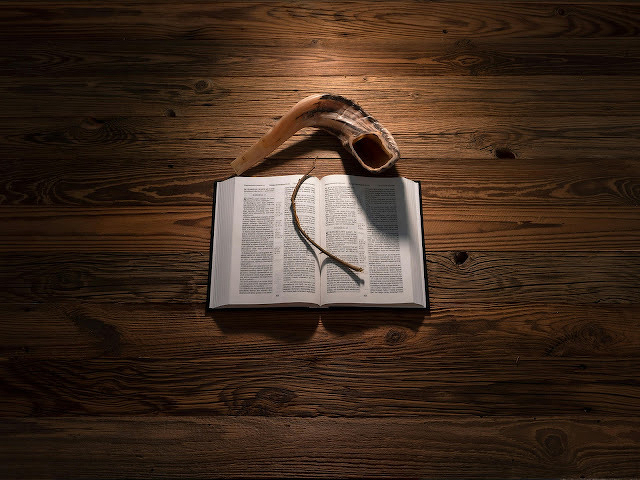
Shana Tovah, mishpascha. It's almost Rosh Hashanah, which means it's time for the annual ritual of seeing how long the oldest person in temple can blow a shofar without passing out. Also time to stock up on Cheerios for Tashlich—because bread is bad for birds and fish and our local DNR rep ok'd the Malt-o-Meal stuff.
As we stumble toward year 5786, this week's Torah portion is Nitzavim ("Standing"), traditionally read on the Shabbat before Rosh Hashanah. The timing isn't coincidental. Like most things in Judaism, it's deliberate, layered, and designed to make you uncomfortable in the most productive way possible.
The portion opens with Moshesummoning everyone—leaders and water-carriers, men and women, children and converts—to renew their covenant with God. It's refreshingly inclusive for a text written millennia before DEI training became mandatory corporate theater. But inclusion here isn't about feeling good; it's about accountability. No one gets to sit this one out because everyone contributed to whatever mess we're in. It's the theological equivalent of a group project where you actually have to participate.
This communal responsibility thing is both comforting and terrifying. Comforting because you're not alone in your failures. Terrifying because you can't blame everything on someone else's poor choices. We're all standing here together, which means we all have to own our part in the year's collection of questionable decisions.
But here's where the portion gets interesting: it introduces teshuvah, the concept of return. Even if you've wandered so far from righteousness that you need Waze to find your way back, the door remains open. Teshuvah isn't just about feeling bad about what you did—guilt is easy and ultimately useless. It's about believing change is possible, which requires a kind of audacity that's either deeply spiritual or mildly delusional. Probably both.
This is what makes the High Holidays more than an extended exercise in collective self-flagellation. Yes, there's judgment, but there's also renewal. The shofar blasts aren't just wake-up calls; they're invitations. The gates of return are always open, which would be more reassuring if most of us weren't so committed to ignoring clearly marked exits.
Then there's the famous injunction to "choose life"—and no, this isn't where we pivot to contemporary political rhetoric that's appropriated religious language for decidedly non-religious purposes. The Torah's version of choosing life is more complex and demanding than any bumper sticker slogan.
Choosing life here means affirming life's sanctity through acts of kindness, justice, and compassion (and *cough* empathy). It's active, not passive. It's not enough to simply not die; you have to actively choose what makes life worth living. For yourself, yes, but also—and this is the uncomfortable part—for future generations. "So that you and your descendants may live." Your choices have consequences that outlast your own convenience.
This is where teshuvah and choosing life converge. Return is the process of realigning yourself with what's life-affirming. It requires taking honest inventory of the past year—which actions brought blessing and which brought harm—and then having the courage to turn toward something better. It's deeply personal work that's simultaneously communal, which is very Jewish: individual responsibility that only makes sense in context of collective obligation.
As the new year approaches, Nitzavim offers both challenge and hope. We've all made choices this year, some better than others. The portion doesn't promise that return is easy—Moshe is talking to a people about to lose him and enter an uncertain future. But it insists that return is possible, and that the choice to affirm life remains ours to make.
The shofar calls, the gates open, and we stand together, imperfect and accountable, ready to try again. It's not a particularly comfortable position, but comfort was never the point.
Tekiah, Shevarim, Teruah, Tekiah Gedolah.
On Not Getting Over It
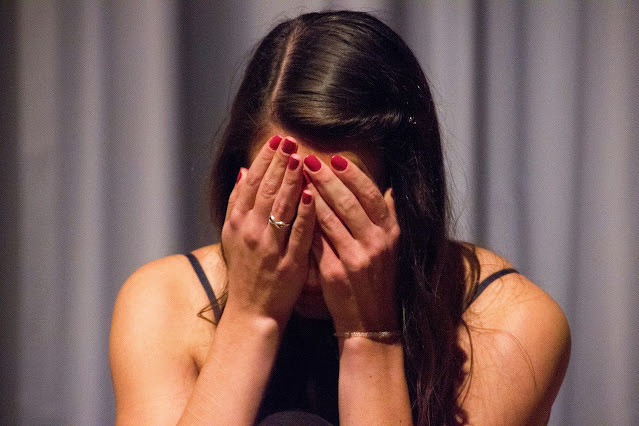
I had a spectacularly shitty week. It was the kind where Murphy's Law decides to throw a block party and invite all the worst neighbors.
First, I narrowly avoided something I'll call Miserable Thing—a looming catastrophe I'd been preparing for with the obsessive thoroughness of a doomsday prepper. I had Plans A through F, complete with sub-bullets for modifications. I'd closed my eyes at night and seen Miserable Thing heading toward me like a light rail. I went to Shabbat services and spotted it across the social hall, casually noshing on matzo. It haunted me until the day it simply skipped me and hit someone else instead -- someone who didn't deserve it any more than I did.
Then I got what was presumably an illegal Covid shot (don't ask how), had a nuclear immune reaction, and spent the next day glued to my couch like a fever-addled lamprey. Following that, I took an edible that was apparently engineered by the CIA, watched my thoughts detach from my skull and perform aerial maneuvers around the ceiling fan, and generally questioned every life choice that led to that moment. The week's grand finale came when someone I care about accidentally said something cruel enough to sting for days.
The only bright spot? The Naked Gun remake was pretty decent.
You'd think dodging Miserable Thing would bring relief. Instead, I found myself drowning in guilt—that particular Jewish craft where surviving something is akin theft. I kept remembering seventh grade, when I won a bag of store-brand popcorn for finishing an assignment first. The triumphant march to collect my prize morphed into a death walk back to my seat, accompanied by a chorus of classmate disapproval. I opened that bag and passed it around desperately, hoping shared wealth might restore my social standing. Because nothing explains adult anxiety about success quite like being an unpopular twelve-year-old.
Somewhere between the Covid fog and the cannabis mishap, my friend delivered this gem: "Maybe you need to get over your trauma."
Ah yes. Get over it. Why hadn't I thought of that? Forty-one years of accumulated damage, years of therapy, medication adjustments, and carefully constructed coping mechanisms—and the solution was simply getting over it this whole time. Brilliant.
Look, I understand that traumatized people can be exhausting. We come in various difficult flavors: the perpetually fragile who require constant gentle handling, the hard candy shells with soft centers that crack unexpectedly, the pressure cookers that explode when you're not paying attention. Sometimes it probably seems easier to just avoid us entirely rather than navigate our particular brands of brokenness.
But here's what I've learned after years of expensive therapy: trauma doesn't disappear. It doesn't pack its bags and leave after you've processed it sufficiently or reached some arbitrary milestone of functionality. Trauma is more like a permanent dysfunctional roommate—one you learn to live with, set boundaries around, and occasionally negotiate with when it gets too loud.
I think of myself as a volcano. All the anger, hurt, frustration, and fear I was told to bottle up stays deep in my core, churning like molten lava. I keep it contained until everyone least expects it, then erupt like Vesuvius, leaving people to wonder why I never mentioned I was upset. The answer, of course, is that I mentioned it constantly—just not in ways anyone recognized.
Therapy taught me that processing trauma doesn't mean pushing through it or achieving some pristine state of being "over it." It means understanding that this happened to me without letting it define me entirely. It means knowing why certain situations feel impossible, why some events make my skin crawl, and how to establish boundaries that keep me functional. Most importantly, it means accepting that I don't have to heal on anyone else's timeline.
The good news is that after this parade of awfulness, I'm still here. The Covid funk lifted, Miserable Thing is in the rearview mirror, and the person who suggested I get over my trauma has since apologized. I'm sleeping soundly again, at least until the next inevitable rough patch.
Because there will be a next time. Bad weeks happen to everyone, but some of us just have more elaborate internal weather systems. The difference is that now I know I can withstand it—not because I've transcended my damage, but because I've learned to work with it instead of against it.
And sometimes, that's the best any of us can do.
Confessions of a Reformed Pilates Skeptic

Five years ago, if you'd told me I'd become someone who voluntarily contorts themselves on dicey-looking contraptions while an instructor cheerfully suggests I "breathe into my pelvic floor," I'd have gone to therapy sooner. Yet here we are, and like all good conversion pieces, mine began with the pandemic.
(Note: the picture above is NOT me. It's AI-generated -- sorry. But I did so as an experiment to see how well I could prompt it into creating an image of me doing Pilates. Results: kinda weird!)
March 2020 arrived with its familiar apocalyptic fanfare, and I made the same calculation as millions of other suddenly homebound humans: if I'm going to be trapped indoors indefinitely, I might as well do something productive before my inevitable descent into madness. So I bought a rowing machine and began what I now cringe to call my "Fitness Journey"—a phrase that makes me sound like someone whose personality revolves around kale smoothies and unsolicited rep counts. For the record, I do write books. It's just that nobody asks about those at parties.
Within months, I was cobbling together routines from YouTube and Apple Fitness Plus, including something called Pilates—a word I'd only heard whispered mockingly about suburban moms in designer athleisure queuing for classes like they were waiting for limited-edition handbags. But I needed core strength, and mine was demonstrably theoretical at the time.
The results were undeniable: forty pounds lost in nine months, though I credit a combination of movement, medication changes, and the general apocalyptic stress of existing in 2020. Still, when a Pilates studio featuring what can only be described as torture devices disguised as exercise equipment opened in town, I was intrigued. These "Reformers" look like something from an S&M dungeon, but I'd learned that Pilates was originally created and practiced on an apparatus—Joseph Pilates developed his method for bedridden WWI soldiers using springs and dowel rods, because apparently nothing says "rehabilitation" like contraptions that resemble medieval siege engines. Nobody expects the Spanish Inquisition, indeed.
One class convinced me. Where had this been all my life? I signed up for a membership faster than you can say "three-month commitment."
Now, before you conjure images of that SNL sketch, let me dispel some persistent myths about this particular form of sanctioned masochism:
Myth 1: Pilates is either impossibly hard or laughably easy.
Neither is true. Pilates is precisely what your body needs it to be—a methodology that combines stretching with resistance training, adaptable to whatever physical disaster you're currently managing. You won't find screaming instructors hurling tires or anyone puking from burpees, but you also won't find gentle stretches accompanied by whale sounds. Your muscles will work, your core will engage, and you'll discover stabilizer muscles you forgot existed. It's challenging without being punitive, which is refreshing in a culture that treats exercise like penance.
Myth 2: Pilates is a "women's workout."
This one's particularly galling given that Pilates literally invented his method for injured male soldiers. The current female-heavy demographic is pure marketing—the fitness industry has simply figured out that women are easier targets for body-improvement messaging. We're more susceptible to "You're not enough, but this expensive thing might fix you" advertising, whether it's Pilates, yoga, or whatever boutique torture method is trending. Meanwhile, capitalism cheerfully profits from our collective insecurities while selling us scubas with matching leggings.
Myth 3: You must be conventionally attractive/thin/flexible to participate.
One class will cure you of this delusion. My studio is populated by every conceivable body type, fitness level, and age bracket. There's an older gentleman who keeps up with the class, soccer moms in oversized t-shirts, former dancers, and people who clearly just wandered in from their couch. Everyone gets corrections, modifications, and the occasional gentle reminder that showing off your splits during leg circles isn't actually the point. The beauty of a room full of people concentrating on their own movement is that no one has time to judge yours.
Myth 4: The equipment looks like sex/torture devices.
Okay, this one's completely accurate. While the Reformers are unsettling, the Cadillacs are worse. You can even hang from them. I can only make so many excuses, but then there's the fuzzy leg cuffs (which I've used before). No way to talk out of that. And don't knock it until you try it.
The real revelation isn't the physical transformation—though my core could now probably survive a minor earthquake. It's the unexpected joy of movement that doesn't feel like punishment, the strange satisfaction of micro-adjustments that create macro-changes, and the discovery that I genuinely enjoy something I once mocked.
Which brings me to my latest plot twist: I'm training to become an instructor. Look: when life hands you a global pandemic and some spare time, you don't just find a new hobby—you prepare to evangelize about it to other skeptics who think they're too up-their-own-ass to try.
On Writing Terrible People: The Themes Behind "I Fucking Hate You"

I titled this blog "Between Books Right Now" as a cheeky excuse to procrastinate while working on my novels. But lo and behold, this summer I published my fourth book, I Fucking Hate You. A couple weeks ago, it hit paperback. Since I have a moment to breathe—and hopefully your undivided attention—I thought I'd discuss it in hopes you'll find it interesting enough to buy, read after buying, and perhaps give my other books a shot while you're at it.
I Fucking Hate You follows two friends, Kate and Rachel, whose relationship implodes after a girls' night gone catastrophically wrong. I've written it from alternating perspectives, starting with the inciting incident (literally called, "The Incident") and continuing through the wreckage of the year that follows. This structure lets you see what each character omits, what they refuse to hear, and how they're unreliable narrators to each other and to you. It's a dark melodrama with emphasis on dark—both protagonists are unlikable, unscrupulous, and unpleasant people who choose self-destruction over the radical act of having a conversation.
The easiest solution is always "why don't they just talk to each other?" But they can't. They're too miserable.
I'm hoping you'll laugh along because some of these situations are ridiculous and unbelievable. I wrote Kate and Rachel to be over-the-top with their venom and lack of self-awareness—like Joan Crawford and Bette Davis fighting over a dead bird on a silver platter. I want you to side with neither and both of them simultaneously. I want you to hate them and feel sorry for them in equal measure.
Since I'm not popular enough to be invited to conventions or give talks, I'm writing out my themes here in hopes this reaches someone someday. Also: slight spoilers ahead if you haven't read it yet.
Toxic Friendships (Or: The Art of Emotional Vampirism)
Kate and Rachel don't begin the novel as friends, though they insist throughout that they've been close since college. They're passive-aggressive to each other, speak poorly about each other to their spouses, and view their relationship as purely transactional. Kate sees Rachel as her designated shoulder to cry on about her mother's death; Rachel needs Kate as emotional support for her adoption struggles. Neither confides their real issues—money troubles, marriage problems, in-law drama, and worst of all, crushing dissatisfaction with their lives.
But Kate and Rachel aren't the only toxic friendship in the novel. Kate's relationship with her trendy theater friends, Louis and Faye, is arguably worse. They happily supply her with recreational drugs despite her known heart condition (if you've read my first book, congratulations—you spotted a Clout reference). When she has a heart attack, they abandon her like she might be contagious. From Rachel's perspective, they're outwardly cruel to Kate even when she's present.
Then there's James, Kate's boss at SACC. Their "friendship" exists in that gray area where Kate might be projecting feelings that aren't reciprocal, James might be leading her on, or they might actually ride off into the sunset together. The bottom line: Kate is sick, lonely, vulnerable, and has zero concept of healthy relationships. No matter the outcome, it's going to implode spectacularly.
Rachel, meanwhile, can't form friendships with women because she's too busy being envious of them. It starts small—daily battles with moms at preschool pickup—then escalates to her sisters-in-law, who don't even have names in her mind, just "the Viper" and "the Honeydew Melon."
Her half-sisters bear the worst of it. Holly, on her mother's side, genuinely wants to include Rachel in her life. But Rachel is steadfast in hating her, mostly to punish her mother for divorcing her father. She also silently accuses Holly—a teenager—of going after her husband. Whether this is true remains intentionally vague, but it's another layer of Rachel's paranoia.
On her father's side is long-lost half-sister Leah (née Robyn). Unlike Holly, Leah wants nothing to do with Rachel and actively avoids her. Rachel, however, is convinced they can be friends, ignoring that Leah's existence caused her family's original fracture. Determined to control her narrative regardless of who gets hurt, Rachel barrels through Leah's boundaries and ruins another opportunity for self-awareness.
Unreliable Narrators (Or: When Everyone's Wrong)
Writing from two POVs was challenging, but it gave me a creative way to cast doubt on who deserves more sympathy. From the Incident to their final meeting, Kate and Rachel's accounts vary in nuanced ways. This doesn't make them liars—it makes them human. They have different perceptions of the same truth.
What originally inspired this book was a similar event in my own life. To keep it brief: I had a terrible time, my friend did not. I stewed for weeks over this "Incident," ready to end the friendship because my entire opinion of them had changed. Then they contacted me out of the blue to say how much they'd enjoyed spending time with me, couldn't wait to do it again, and hoped I'd had as much fun as they did.
My mind exploded. What the fuck? They had fun? I was miserable! Could it be that I wasn't the only person in the world experiencing things, and—gasp—other people experienced them differently?
There are always at least two perspectives. What's fun and games for some might be a night in hell for others. It's human nature to see things selfishly, and when I realized that, I knew I had to write this story from two perspectives.
While Kate and Rachel aren't meant to be likable, they had to be empathetic. If readers hate both characters, I won't win them over. So regardless of the alternating POV, both women remain sympathetic. Kate is sick, grieving her mother, struggling in her marriage. Rachel is infertile, also grieving her mother, overwhelmed by motherhood. Even at their worst, neither should be condemned for their feelings. Kate faces a bleak future and lashes out; Rachel buckles under the pressures of motherhood. Both feel abandoned and don't know how to process it. Both hate how marriage has defined them.
Had I given Kate more first-world problems or made Rachel more of a trad-wife stereotype, this wouldn't have been a novel so much as a MAGA instruction manual.
Each character gets to destroy the other once during their climactic fight. They go after each other's biggest insecurities: Rachel tears Kate down for being boring, for losing the interests that once defined her, for exploiting her own grief, and—worst of all—for amounting to nothing but a housewife after all her grand plans. Kate rips into Rachel for being delusional about motherhood's joys and reminds her she never wanted to marry Dan in the first place.
This cuts to what each woman knows about herself: Kate has accomplished none of her life goals, and Rachel only got married and had children to repair her own childhood damage.
Ironically, the only time I made sure their POVs aligned closely was during their final meeting—when they say goodbye forever. Even then, there are differences in who gets the last word. Rachel looks good in her own story; Kate comes out on top in hers. We all write our own narratives and make ourselves the heroes. Neither character was going to let the other hurt them without one final response.
The title, I Fucking Hate You, is what they scream at each other during the novel's climax. So much hurt, resentment, and anger gets dumped out in that moment. But the truth is, Kate and Rachel don't hate each other. There's nothing substantial enough to hate. They're both the same—two women with marriage troubles, missing their mothers, dealing with health issues who go out for a night and don't have a good time.
That sucks, but it's not hatred-worthy.
The truth is, when they scream "I fucking hate you," they're not talking to each other. They're talking to themselves.
Parashat Eikev: Remembrance of Things Past
This marks my last weekly d'var Torah essay for the summer—not because I'm abandoning Torah study (God forbid, literally), but because I'm shifting focus to my very Jewish novel and exploring different essay territories. Think of it as a sabbatical from weekly biblical commentary, not a divorce from discussing the particular joys and neuroses of Jewish life.
I'm going out on Parashat Eikev, which feels appropriately anticlimactic. Moshe is still delivering his farewell address to the Israelites—imagine your grandfather at Thanksgiving, except instead of stories about walking uphill both ways to school, it's remember that time you built a golden calf and nearly got us all smited? The man has commitment to his talking points, I'll give him that.
Eikev reads like a greatest hits album of Israelite failures, which immediately brings to mind that brilliant song from Crazy Ex-Girlfriend: "Remember That We Suffered." Picture Tovah Feldshuh and Patti LuPone in minor key, dancing the hora while cataloguing generations of Jewish trauma. It's peak Jewish entertainment: turning collective memory into musical theater with just the right amount of self-deprecating humor.
But Moshe isn't just being repetitive for dramatic effect. Throughout this portion, he commands the Israelites to "remember" or "do not forget" with the intensity of someone who knows his audience has the attention span of goldfish. This isn't new territory—he's previously warned against the spiritual dangers of selective nostalgia. Memory, in Jewish tradition, isn't passive reminiscence; it's active moral discipline that shapes humility, gratitude, and ethical responsibility.
The Golden Calf incident gets another rehashing, along with various rebellions and general acts of collective stubbornness. Yes, it's uncomfortable. Yes, shame is involved. But that's precisely the point. Remembering history honestly—the failures alongside the triumphs—brings humility. If we curate our memories to include only victories, we risk moral blindness and the kind of arrogance that thinks we're invincible.
(This applies beyond Jewish history, obviously. American exceptionalism has entered the chat.)
But Moshe balances this harsh reckoning with reminders of blessings, which serves as gratitude training. There's a reason Jewish liturgy is heavy on blessings—as I said last week, we have prayers for everything. Birkat HaMazon, the prayer after meals, thanks God for food, land, Jerusalem, and divine goodness. It's ritualized gratitude designed to prevent entitlement and remind us that abundance isn't purely self-made.
The second half of the Sh'ma appears in this portion too, with its instructions to bind these words on our arms and foreheads, teach them to our children, fix them to our doorposts, and speak them daily. This isn't metaphorical—it's about creating tangible reminders because memory fades without physical anchors. We call this zikaron, active remembrance. You see it at Passover seders, in Kiddush, in movements like Zachor B'Salon to preserve Holocaust memory. Memory requires maintenance.
I study these portions weekly and Mishnah daily partly because my memory is Swiss cheese, but mostly because I want to understand the narrative of my ancestors. These stories—historically accurate or not—are gateways to collective memory. And since this parashat is all about remembering, what I want to retain from it is this: forgetting leads to arrogance and identity loss. Memory functions as both individual moral discipline and communal anchor, revealing uncomfortable truths about our failures while affirming the reality of our blessings.
Next month brings Elul, the Hebrew year's final stretch before the High Holy Days. It's prime time for personal inventory—not to wallow, but to extract lessons worth carrying forward. Moshe understood that the point of remembering isn't to stay stuck in the past, but to enter the future with clearer vision.
These weekly essays have been an unexpected joy this summer—an exercise in staying connected to community while learning something new to share, regardless of readership size. Sometimes the best conversations happen when you're not sure anyone's listening.